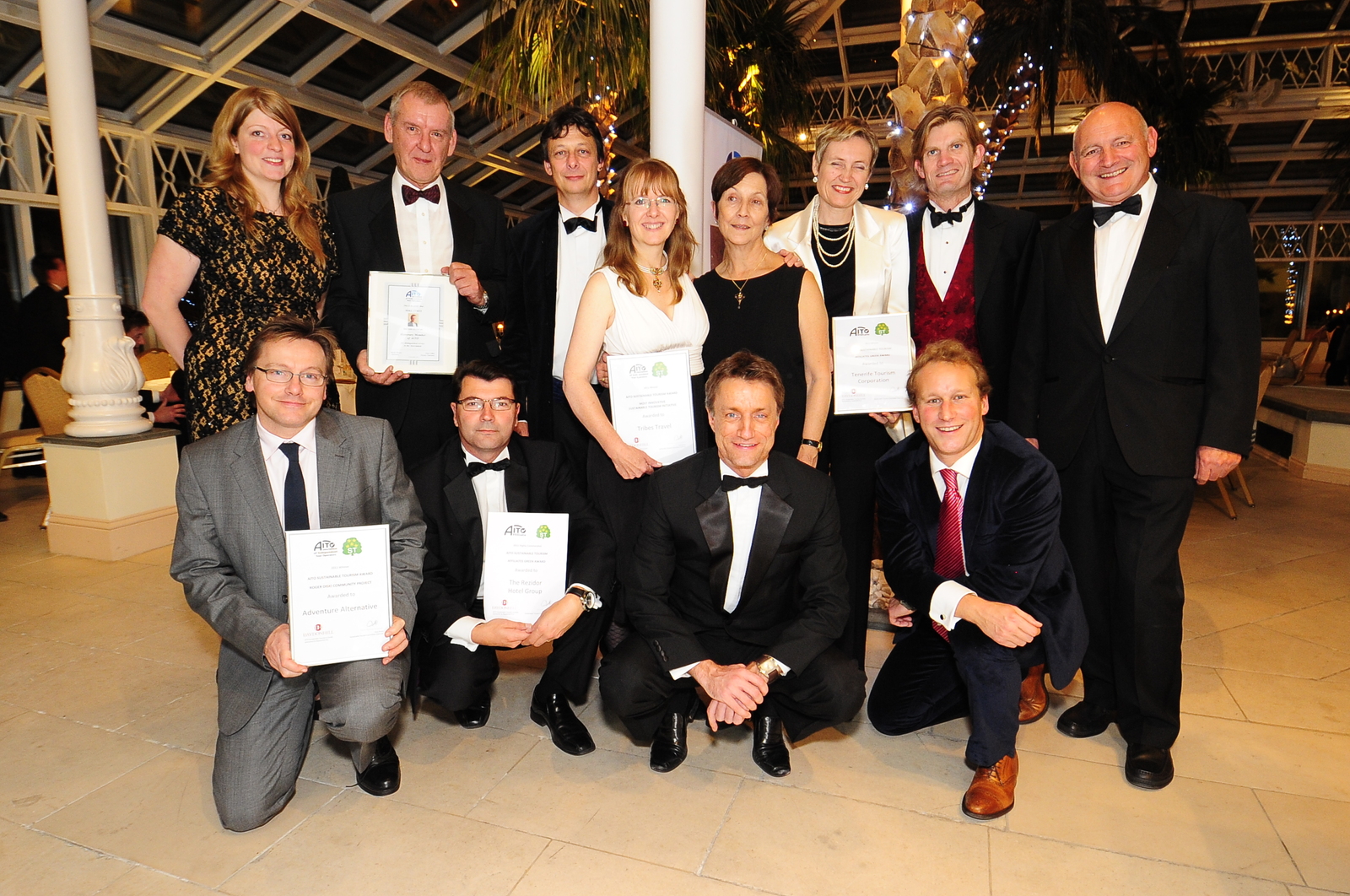
AITO announces the winners of its Sustainable Tourism Awards 2011

The winners! Back row, from left to right: Megan Freese of Explore; Mike Sykes of Dragoman; Guy and Amanda Marks of Tribes Travel; Judith De Witt (judge); Pia Louw of the Tenerife Tourism Corporation; Chris Breen (chairman of AITO ST Committee); and Dick Sisman (judge). Front row, from left to right: Gavin Bate of Adventure Alternative; Luc Genest of Rezidor Hotels; Richard Hume of the Tenerife Tourism Corporation; and Richard Hammond (judge)

Sustainable Tourism (ST) is at the very heart of The Association of International Tour Operators’ (AITO) ethos, and the annual AITO ST Awards – presented at an AITO anniversary dinner on 23rd November, 2011 – are always big news in the travel industry. AITO’s ST guidelines state that travel and tourism should benefit host communities, respect local cultures, protect the environment and conserve natural resources, and member companies are rated by AITO accordingly. With 24 companies currently awarded the top rating of 5 stars, the ST Awards 2011 were hotly contested.

Judge and environmental guru Dick Sisman says: “This year’s entries show once again the depth of understanding that AITO members and their affiliates have for projects which support communities and the environment in tourism destinations around the world. I am particularly pleased to see the new Roger Diski Community Project award, which remembers a remarkable man and his love for the host communities who helped to make tourism such a special event for him and continue to do so for us.”

The results are:

The ‘AITO Affiliates Green Award 2011’ is for the AITO business partner or tourist office deemed by the judges to best demonstrate sustainable practice in a tourism or non-tourism area, and the winner was the Tenerife Tourism Corporation. Highly commended in this category was the Rezidor Hotel Group.

For the Tenerife Tourism Corporation, achieving sustainability across the island is a group effort, involving various hotels, businesses and visitor attractions. Tenerife now boasts the world’s first-ever village of carbon-free homes and, with one of the world’s three largest Solar Photovoltaic Plants, the island hopes to soon be able to generate more than half of its energy through natural energy resources. The Government too has played a vital role by funding various initiatives focusing on, for example, recovery and protection of the seabed, and using wind power to run public transport. The Ocean Dreams Factory, meanwhile, has developed the unique Flyover diving project which allows visitors and residents to meet marine species and participate in conservation activities themselves.

In 2001 the Rezidor Hotel Group (runner up) introduced a Responsible Business programme, which focuses on respecting social and ethical issues in the company and community, reducing negative impact on the environment. Nearly 50% of Rezidor hotels have already been awarded eco-labels, and the company hopes to reach its target of 100% by 2015. This year the company also supported the UN Refugee Agency by collecting monetary donations from employees and guests at all 315 operational hotels, to raise funds for Libyan refugees. Rezidor even has a designated Responsible Business Action Month which, this year, managed to raise €85,000 for charity.

The winner of the ‘Most Innovative Sustainable Tourism Initiative 2011’ was Tribes Travel, and the joint highly-commended runners up were Wilderness Scotland and Explore.

Tribes Travel (winner) has introduced a system of environmental and social impact auditing of the properties with which it works around the world. So far, over 300 properties have been assessed across 17 countries, establishing their relative eco strengths and weaknesses, before publishing their grading on the company’s website. This process helps to raise environmental awareness among property owners, who are able to make positive changes as a result. Tribes also has a business plan to push sales for the higher-graded properties as an added incentive for those with a lower grading. The audit form has been so successful that the company has shared it with the Ethical Tour Operators’ Group so that other operators can replicate it.

Wilderness Scotland (joint runner up) has put together a Wilderness Guide Training Programme (WGTP) which provides adventure travel guides with unique training focusing on client education, awareness and understanding. The course teaches guides how to inspire clients about nature conservation and sustainability, with added modules on the Leave No Trace campaign, wilderness cookery and astronomy. The programme currently has over 1,500 clients per year, and is delivered in partnership with local businesses and accommodation services who participate in the Green Tourism Business Scheme.

Explore (joint runner up) has recently introduced ‘Responsible Travel’ cards on all tours in India, with the intention of rolling them out elsewhere if the scheme proves successful. These cards outline topics including how litter and recycling should be dealt with whilst on the trip, tips on what to wear, and advice on how to respect local sensitivities and cultural differences. The cards also mention any local projects supported by Explore, with advice on how customers can give something back to the community should they wish to. Explore is dedicated to fundraising for various projects around the world, and is heavily involved in the running of a number of Sustainable Tourism courses.

The final award was the ‘Roger Diski Community Project 2011’, and was won by Adventure Alternative. Highly commended was Wild Frontiers Adventure Travel.

Adventure Alternative (winner) impressed the judges with its long-term development plans for two rural village communities in the Nepal Himalaya. One of its main achievements has been to improve the quality of inhabitants’ lives and to stem the migration of younger generations to the more urban lowlands, thereby rejuvenating this unique community. Locals have been involved with projects including the design and build of a hydro-electric plant, the building of new classrooms and improved facilities at local schools, and the creation of an annual medical camp where western medical students and Nepali doctors provide free consultations and medication. The company also funds eight teachers’ salaries in local schools and sponsors 12 local children to go on to higher education in Kathmandu. As winner of the award, Adventure Alternative will receive a £1,000 bursary which will be put towards a project to establish a tea production co-operative in Bumburi.

Wild Frontiers Adventure Travel (runner up), set up the Tourism in Ethiopia for Sustainable Future Alternatives (TESFA) initiative in 2003. Its aim was to set up a network of community-run tourism enterprises which would allow visitors to trek through the Ethiopia’s remarkable landscape while putting money into local communities at the same time. Treks have been incorporated into Wild Frontiers’ group tour itineraries and the project has increased employment in the region by offering guiding, cooking and home-stay opportunities to local families.

To ensure that AITO’s ST programme is kept fully up to date, a dedicated ST committee of members and advisors reviews progress and ensures that AITO is at the forefront of environmental thinking. To find out more about the 140 AITO specialist tour operators and their ST initiatives, visit www.aito.com.


The frustrations of a disabled tourist


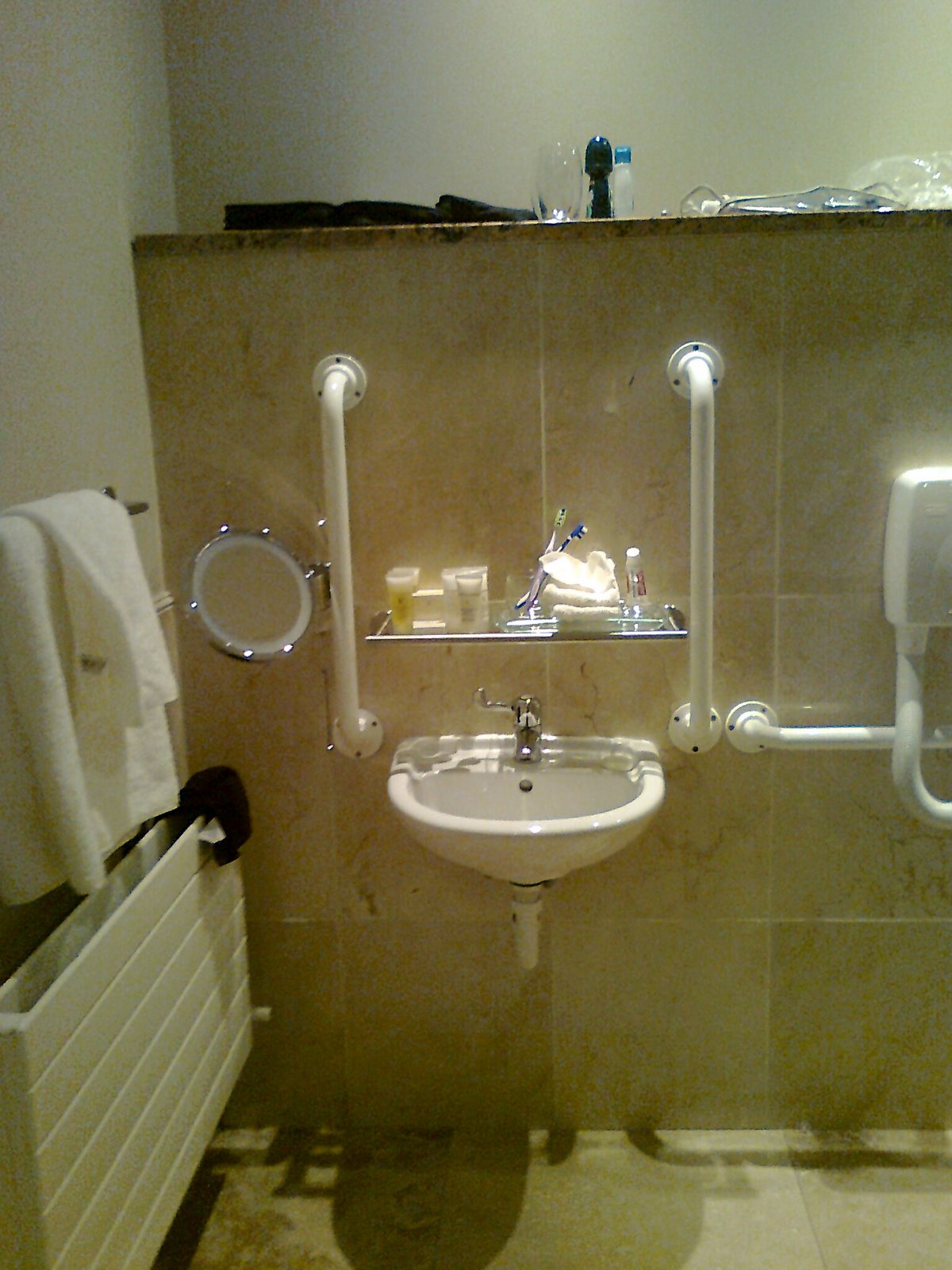
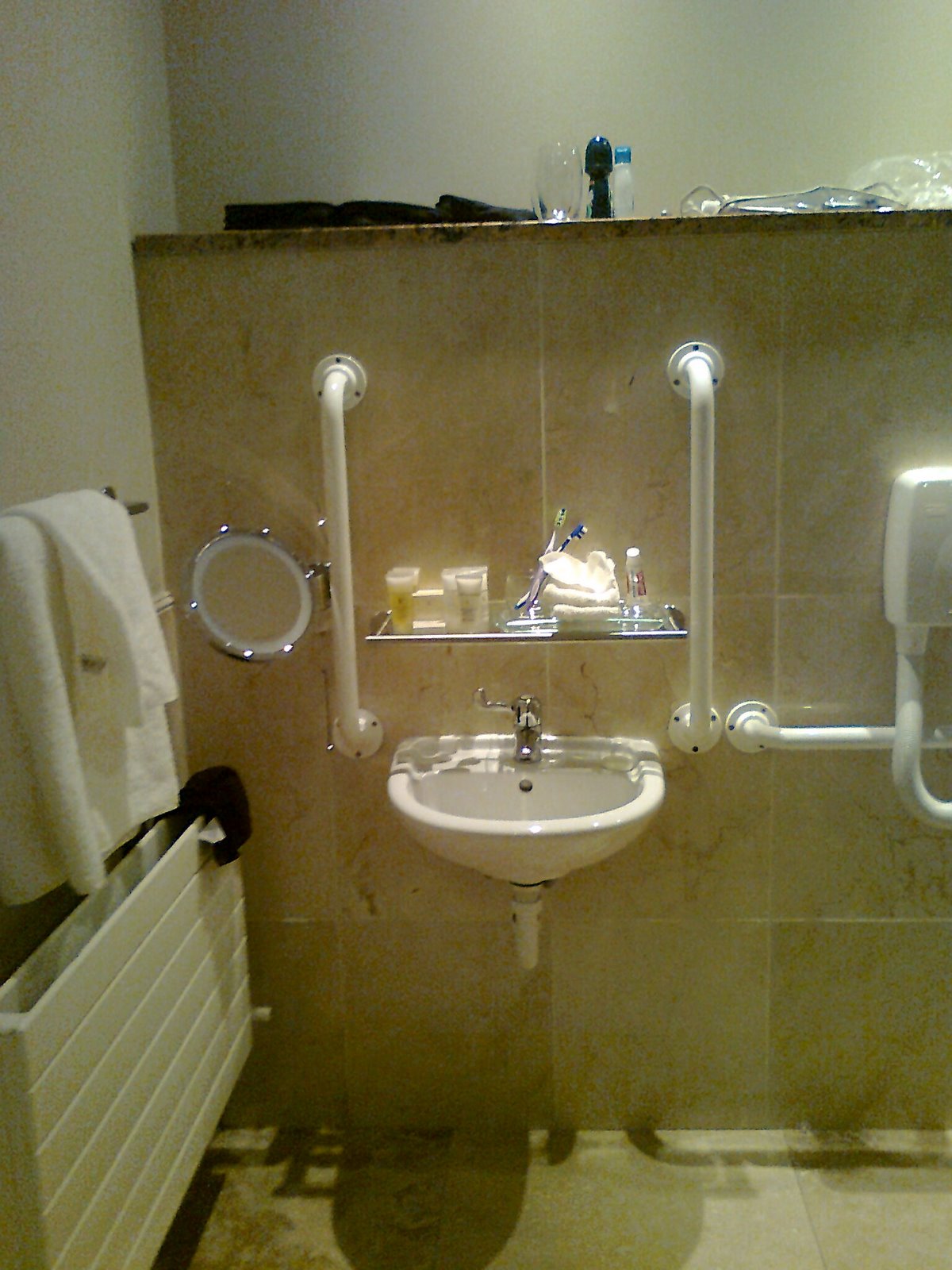
The miniscule basin

Further to my article on accessible tourism,  I invited thoughts from disabled readers on the good, the bad and the ugly when they head off on their travels. One reader, Jean Roth from Dublin, Ireland, summed up the frustrations of many as in my guest blog below:

I have always been interested in sensible design for living areas. As someone who is ‘ambulant disabled’ who occasionally requires a wheelchair, I have had many an experience of problems, and could fill a whole article with examples of disastrous situations. But here are just a few of the problems:

  • Showers in baths, toilets that are low and/or without handrails, doors with heavy springs….architects really have no idea when it comes to kitting out hotels for disabled people. They do not account for people who are ‘ambulant disabled’ and give scant consideration to those in wheelchairs, and forget that the disabled person will quite possibly have a partner/carer who will be able-bodied.
  • I always ask for an accessible shower, explaining that it must have level access (not a shower in a bath) or a ‘wet room’. Mostly, I find that the shower is in the bath! This is considered accessible?!
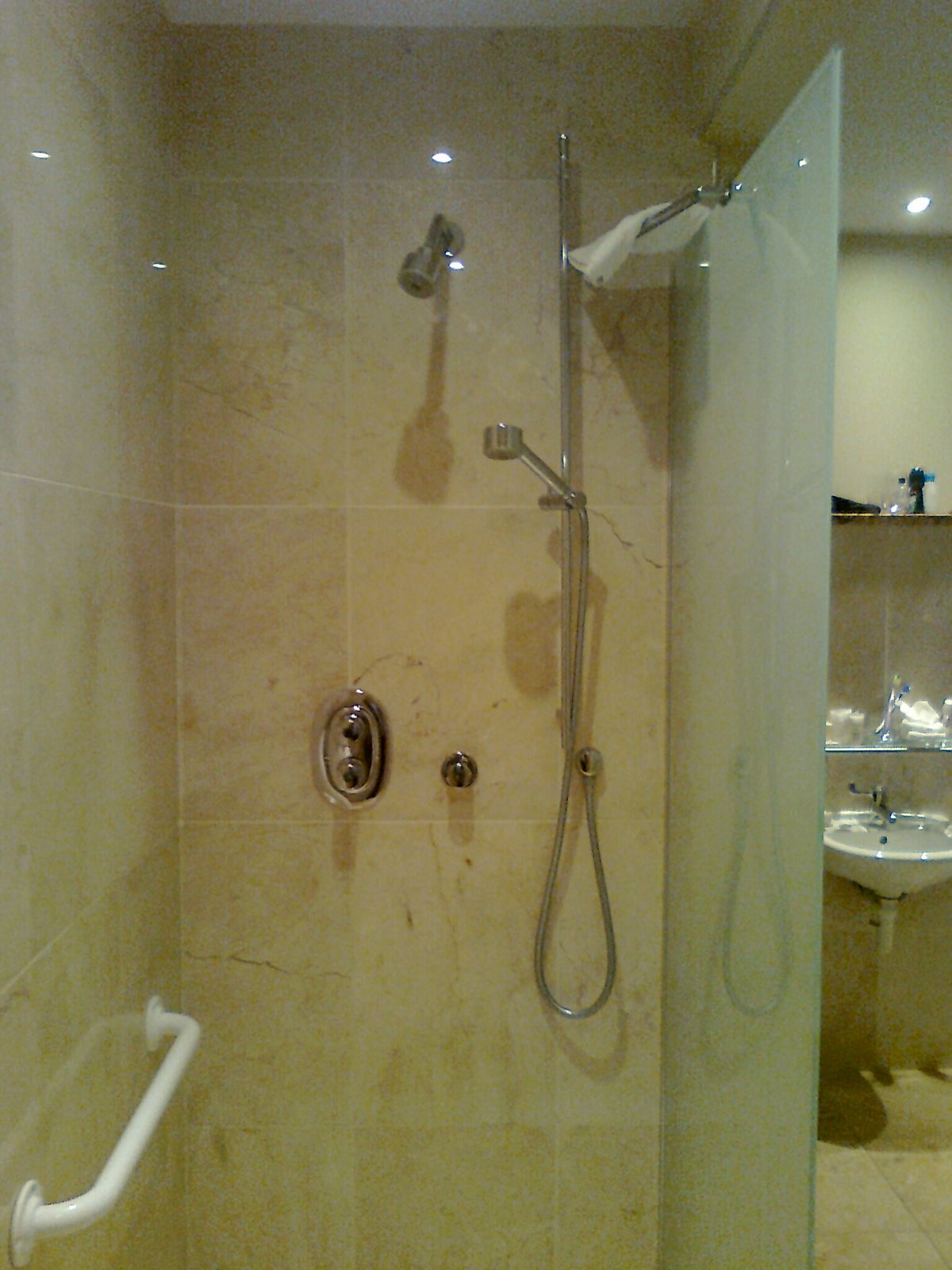
  • My worst experience was in a well known and respected hotel in Westport, Co. Mayo. At first glance, it appeared to be a well appointed bathroom. That is, until one wanted to, for instance, use the bath mat. This was positioned on top of the dividing wall for the shower area, and was approx 6’6″ high, and for many people with mobility issues, the bath mat is vital. The only shelf on which to put ones toiletries was also almost 6′ high.

    Look up to spot the elusive bath mat
  • There was no provision for a partner/husband. My husband, 6’2″ tall, had to use a chair in order to get low enough to use the basin in order to shave. The shaving mirror was also really low – there was no other mirror. It simply never occurs to people that a disabled person might have an able-bodied partner who would require a basin at a normal height with a mirror also.
  • Most Disabled Loos have those ridiculous, tiny basins, with spray taps that only allow a very slow spray. In other words, useless. Why on earth people think that we wouldn’t be able to wash our hands normally, I do not know! And sometimes they are so small there isn’t even room to get ones head down low to brush ones teeth!
  • I have been offered lovely huge baths, but not a handrail in sight, making them totally unuseable.
  • The shower-chair is sometimes positioned at a distance from the shower,which is impossible for a wheelchair user to cope with.
  • Even though I always request disabled facilities when making my booking, we usually find that the first room we are shown on arrival is a ‘normal’ room, which means that we have to go through the whole palaver of going back to reception and insisting on an accessible room.
  • Having travelled extensively, I have found the UK to be the worst when it comes to such requirements, mainly because so many hotels are very old buildings. The British still want their bath, while the rest of the world takes a shower!
  • I firmly believe that, before a building is passed as accessible, the architect should have to work through the building in a wheelchair. This should be done from the car-park in, and throughout the building, and include turning lights on/off, opening and closing doors etc. For instance, try opening a door that has a heavy spring on it, while sitting in a wheelchair!


Accessible tourism

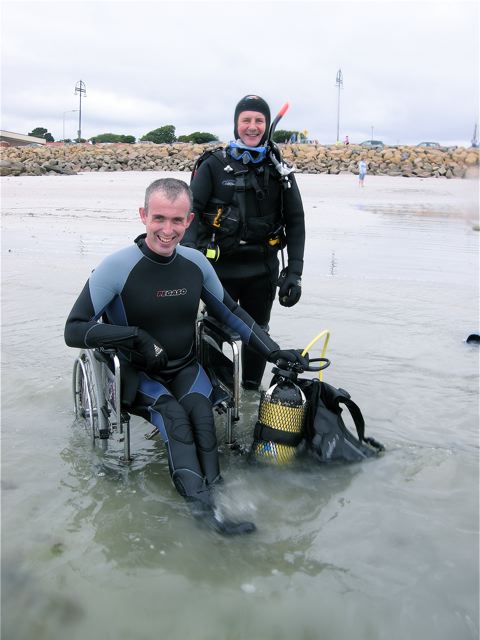
Diver Gary Allen and diving buddy John McDonagh about to take to the water in Salthill, with The Galway Dive School, Ireland

An edited version of this article was published in The Irish Times 19 November 2011

I have been wary of tackling the subject of disability for some time. I admit it, I was afraid of getting it wrong, using politically incorrect terminology or causing offence, and so, to my shame, I am only now starting to try and understand some of the real issues. It would appear, however, that I am not alone, with many other people working in tourism nervous of ‘getting it wrong’ and turning a blind eye (there you go, an inappropriate pun already). And with over 100,000 people working in accommodation and food services in Ireland alone, that’s a lot of people who are afraid to say ‘Can I help you?’.

There are a lot of myths around disabilities and tourism, according to a prestigious panel of speakers at last week’s World Travel Market in London, the ones who finally made me sit up and take notice of the fact that we in the tourism industry have not only failed millions of disabled people, but that we are also missing out on a potentially huge market. There are 12 million disabled people just across the water in the UK, over five million of whom are over state pension age.

Most accommodation websites offer information to families, walkers, cyclists, honeymooners, anglers and so on. If, however, you are blind, autistic, deaf, have arthritis or are a wheelchair user, then you’ll be surfing from dawn ‘til dusk to find an Irish cottage online with all the details you need.  If  you have a disability and go to discoverireland.com, you have to then go to the tab ‘Plan your Visit’, then click ‘Facts for Visitors’ and then finally (if you aren’t feeling marginalised enough already) to a  section marked ‘Disabled Travellers’. And at this point you are told to write to (not even a link) The National Rehabilitation Board for a fact sheet.

According to Jenifer Littman, CEO of Tourism for All, a UK charity dedicated to accessible tourism, “120 million people in Europe say they would travel more if they had facilities”. The problem is not always the lack of facilities, however, according to  Craig Grimes, founder of Experience Community (experiencecommunity.co.uk) who makes  accessibility videos of popular destinations in UK, and has also created an exciting new website called Accessible Travel, which looks at the accessibility of hotels in various popular destinations. One of the greatest difficulties is in the lack of information available before booking.  but in the lack of information available before booking. For example, can you get there by public transport, how far is it from the car park to reception,  is there is an induction loop, menus in Braille, do you have full measurements of doorways? Is there a bath and/or a shower, are there single beds for carers, allergenic bed linen, a proper fridge instead of minibar for storing medication? And if you can back it up with photos and video, even better.

Ross Calladine, Accessbility Manager at VisitEngland says that the potential market for tourists with disabilities coming to England has been quantified at £2 billion sterling. The reality is that money often creates change, but some will also act because they see it as common sense and good customer service, such as leading hotel chains Scandic in Scandinavia and Thistle in UK which have impressively detailed descriptions and photos of all their accessible facilities.  Also worth checking out is website openbritain.net, which not only provides a wealth of information but is also launching a travel app in January.

It is up to all of us working in tourism to provide the information people need to make their holidays memorable and accessible. Take a peek at VisitEngland (visitengland.org), a site which not only has good accessibility information for tourists, but also has excellent guidelines  on how to create an access statement. Put ‘access’ into their search box for a library full of resources.

I will start to get my own act together by putting this article here on my blog, and linking to any Irish tourism business doing more than the statutory minimum. Such as Saoirse-ar-an-uisce, a fully accessible boat trip on the Grand Canal (kildare.ie/community/easysiteswp/saoirse-ar-an-uisce), Wheelyboats (wheelyboats.org) an accessible fishing boat in Waterford, The Galway Dive School (divegalway.com) which teaches diving to people with various disabilities or Loughrea Riding Centre in Co. Galway, which offers riding breaks for disabled people, using specially constructed carriages (horsetrailsireland.com). Bet I can get the info up there quicker than you can write ‘Dear Sir – please can you post me a factsheet…’

Note from author: I had very positive responses to this article which included the following information:

  • Pioneering website for independent travellers, Tripbod, has since announced that it is embracing accessible tourism into its business model, and inviting Tripbods from all around the world who have knowledge of accessibility in their area to sign up and share their knowledge. See article giving more details on this.
  • Inclusive London, an app for iphones and Android was launched in December 2011.  This free app aims to give greater freedom to people with specific access requirements who are planning a trip to the capital. Linked to the Greater London Authority’s (GLA) InclusiveLondon.com website, the app provides a range of information to people with access needs, including those with disabilities, older people and parents with young children and buggies.
  • One Irish Times reader, Sean O’Kelly, who is also a wheelchair user, wrote to me with details of two websites which may be of interest. One is disabilityawareness.yolasite.com, which was set up by Sean himself, promoting disability awareness in Irish secondary schools through workshops. The other website he uses for his own travels is  disabledgo.com.
  • Another reader directed me to a very useful map resource which has public access so that we can all upload our favourite places with good accessibility. It is called Wheelmap (http://wheelmap.org) and it uses technology which already exists to pinpoint places of  interest on maps (like Wikipedia but for maps), but this version adds accessibility details. Start adding your favourite places in your chosen destinations and get the wheels rolling on this one.  There is also an app available, more details of which can be found here. Wheelmap also recommends the use of apps  iLOE and Mapzen POI collector to tag places, going to ‘Leisure‘ to find out about the wheelchair accessible status of places around you.
  • One reader, Jean Dolan sums up the views of so many tourists who have access issues. I have posted them in a separate post so do please take the time to read them. She expressed her concerns to the businesses in question, and they never replied, so here is a chance for her to voice some of her well founded frustrations.
  • Thanks to the Brothers of Charity in Kilkee, County Clare, and two local women who ran a marathon to raise funds, there is now a beach accessible wheelchair on this stunning Blue Flag beach, available for use from July until end August
  • The Irish Wheelchair Association’s  initiative in Dunamon, Co Roscommon, where several extra-wide pontoon jetties have been built out over the River Suck to facilitate wheelchair-users who want to go fishing.
  • Fantastic new surfing company Long Line Surf in Benone, Co. Derry is very happy to help people with disabilities learn to surf. In their own words, “Down here at Long Line we feel that everyone should be given the opportunity to try it at least once and so we have created a lesson programme for people with disabilities, whether you have a physical disability or you have Down’s syndrome or Asperger’s Syndrome we are more than happy to take you out”. Great company led by a switched to sustainability, Dan Lavery
  • And check this out from Disabled Divers International, whose website also has a load of great accessible diving centres listed on it.

Family fishing holiday in Ireland

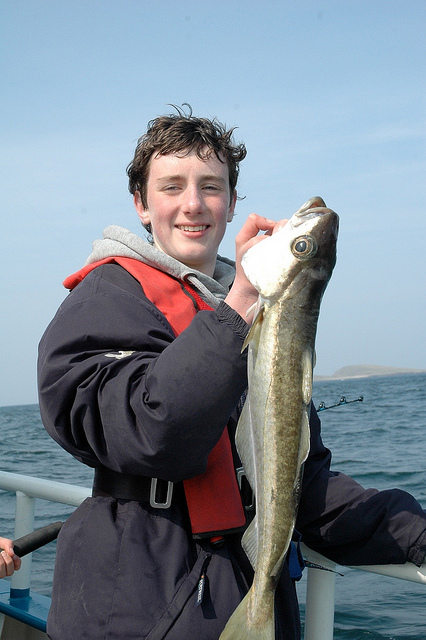
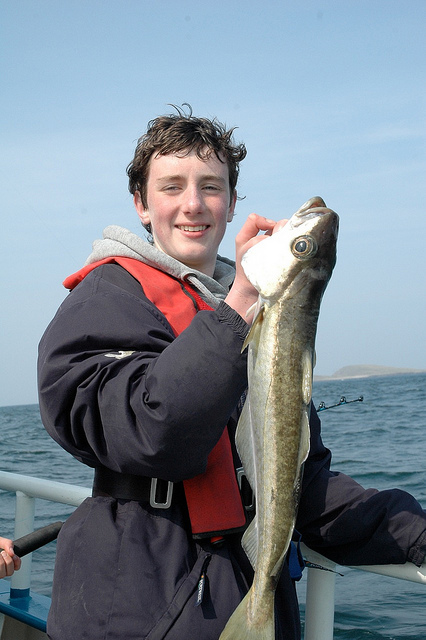
A load of Pollocks. Photo: Catherine Mack

There is a growing trend on Twitter for #PostiveIreland entries: stories of Irish people who are turning recession and depression into a renaissance of creativity and resourcefulness. This is as tangible in tourism as anywhere else and Dúlra Nature Tours in Erris,CountyMayo, is a gleaming example of new, exciting forms of tourism, which brings us back to nature and our fine local resources.

Belmullet fisherman Anthony Irwin has teamed up with partner Angela Healy to create a ‘Catch and Cook’ weekend off that spectacular stretch of coast which is, sadly, more associated with the local disputes with Shell than sustainable tourism. There was no thought given to politics this weekend, however, as we left Blacksod Pier first thing in the morning, and headed out into the Atlantic on board Dúlra na Mara for a day of adventures. After about an hour, during which our skipper, another local Simon Sweeney, shared the history of islands which passed us by, we found a good spot and had a quick angling lesson. Within minutes the waves were echoing with cheers as, one by one, we pulled in buckets full of Mackerel and Pollock.

The Dúlra team are not just fishermen, however, they are also expert nature guides and cooks (this is where Angela steps in), ensuring that our lunch stop on the white sandy beaches of deserted island Inis Ge wasn’t short of a good story or a fine bite to eat. Once a hive of activity when it was home to a whaling station (closed in 1914, thankfully), wildlife thrives here now, home to Barnacle Geese in winter, nesting seabirds in spring, and seals all year round.  Lunch was equally impressive in its wildness, a fresh fish and pinto bean stew, scones made with duileasc seaweed and homemade bread. All devoured from our perch overlooking the tiny harbour with its well preserved stone cottages, now only used by ex-residents who come back to holiday, and the sheltered calm, clear waters.

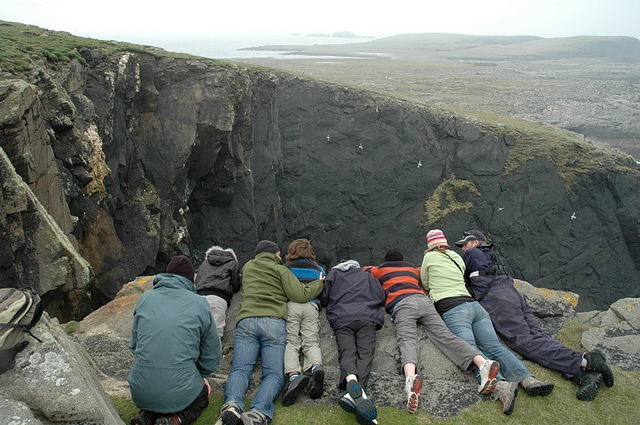
There was nothing these lads didn’t know about the island, especially the best bird watching points, as they led us up over the hills to the far side of the island, past the architectural wonders of 18th century navigation towers, over the old lazy beds which villagers had cultivated, to the windy cliffs which are home to hundreds of nesting Fulmars. We were gently encouraged to crawl to the edge and lie on tummies. Anthony was made to hold onto my feet, however, as I am such a wimp, but boy was it worth it. For about twenty minutes we all just lay there, mesmerised by the magic of these mothering seabirds, as they swooped back and forth protecting and nurturing.

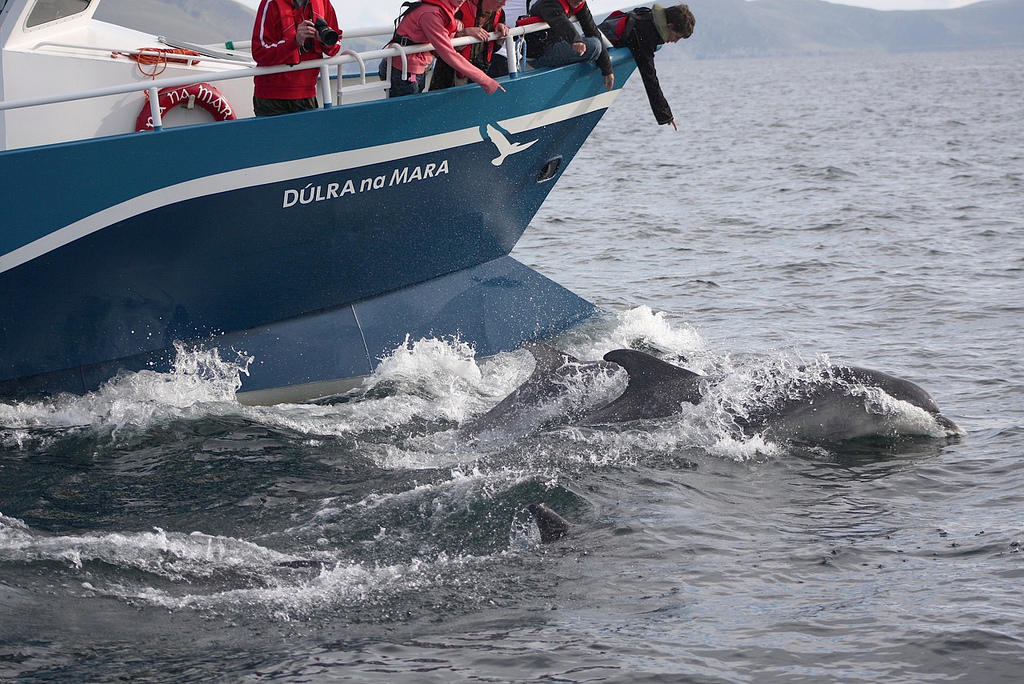
Back on board, and after a bit more fishing, we were heading back to the mainland, when Anthony handed my youngest son the binoculars. “Dolphins!” he yelled, and within minutes, engines off, a pod of beauties was surfing our bow. A definite Twitter  #positiveireland moment, where you can also check out my video of it all.  A more than giddy bunch of adults and kids were then minibused back to the luxurious self-catering house which was home for the weekend. The only difference is that there is nothing self-catering about it, as we arrived back to a gourmet fish feast prepared by Angela, and added to by us, our catch proudly held high. But not before we were taught to fillet it and prepare it first. If this doesn’t

Spotting dolphins on the way home Photo: www.dulra.ie

have your kids eating fish, nothing will.

The adventures continue into the next day with a walking tour around Erris Head, mussel and seaweed foraging and more gourmet gorgeousness back at the house. The house, by the way, is an impressive sustainable timber frame design, built by Anthony. Is there nothing this dynamic duo can’t do, I wonder? They are so charismatic, creative and committed to their region and its sustainability, I have a feeling that you should book in quick, as someone with any sense will try and snap them up for a TV series. Accommodating ten, this is the perfect ethical corporate  break, family reunion, or big birthday bash, or just go for a one day option, if you have accommodation somewhere else in the region. Although, nothing beats catching, cooking, eating, drinking and then just collapsing. Watch a video our memorable family day out here. This article was first published in The Irish Times


A bit of scary birdwatching on Inis Ge Photo: Catherine Mack