How do I find the words?….

We alrtweekI love the choice of words that Ron Mader, editor of Planeta.com, has used to guide us through this year’s Responsible Tourism Week, an online conference which was created by Ron himself. Every day he used a new theme, teaching us to be Attentive, Generous, Creative, Empathetic, Curious and Grateful  while immersing ourselves in the world of travel, whether we are hosts, guests, writers, photographers, publishers, tourist boards, activity providers etc.

I am always bowled over by the personalities I meet on my travel writing expeditions. They demonstrate the practice of these key words throughout every aspect of their businesses and so I am taking this opportunity to celebrate them. Please visit their websites, follow them on Twitter or Facebook, spread the word about them, and use them as case studies to inspire others to act the same way. Or, if they have businesses which are open to guests, just go visit them. They will all be glad to say hi, I am sure.

  1. Attentive – One of the most attentive people I know is Valere Tjolle, a UK based sustainable tourism consultant with Totem Tourism and Sustainable Travel editor at Travelmole. Anyone who has been lucky enough to meet and chat with Valere in detail about the issues of sustainable tourism will know that there are few more attentive people than him. He talks and writes about sustainable tourism in a way that steers clear of academic bluff, he has no hidden agendas, he has been working in tourism for long enough to see responsible tourism go from niche to norm, back to niche and then to a place which lies strangely in between the two. When hearing about worldwide tourism projects he is attentive to all the details, highlights them on Travelmole for all of us to read. He listens to everyone’s stories, asks all the right questions and pushes the envelope when questioning tourism leaders. His attentiveness means that many people, who wouldn’t normally be given one, have a voice. He has also decided to extend his already busy life into a tour operator business, just launched this week, bringing tourists to the wonderfully undiscovered region of Romagna in Italy . Still in its infancy, Watch this space , Best of Romagna,  for more details.
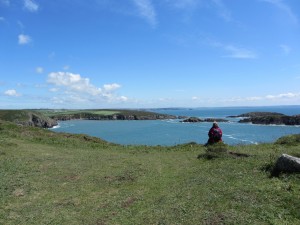
    Pembrokeshire coat path between St justinian's bay and Porth Clais
    Pembrokeshire coat path between St justinian’s bay and Porth Clais
  2. Generous –Having walked on The Wales Coast Path a lot, one of the most glorious long distance walking routes in UK, I was struck by the generosity of landowners who are happy to share their space with tourists. I stood on the Pembrokeshire coast after walking from headland to headland all day, looked out across the water and thought how amazing it would be to walk the whole coast of my native Ireland.  But sadly it isn’t possible, due to land access issues. This is the same in so many countries, but in Wales farmers and other land owners have opened up paths for walkers, albeit in exchange for a small remuneration, meaning that not only can you now walk the length of the coast of Wales, but around the whole country as the Coast Path now links up with the Offa’s Dyke Long Distance Trail which follows the inland border with England route for 285kms. All thanks to the generosity of strangers.
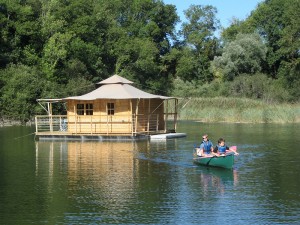
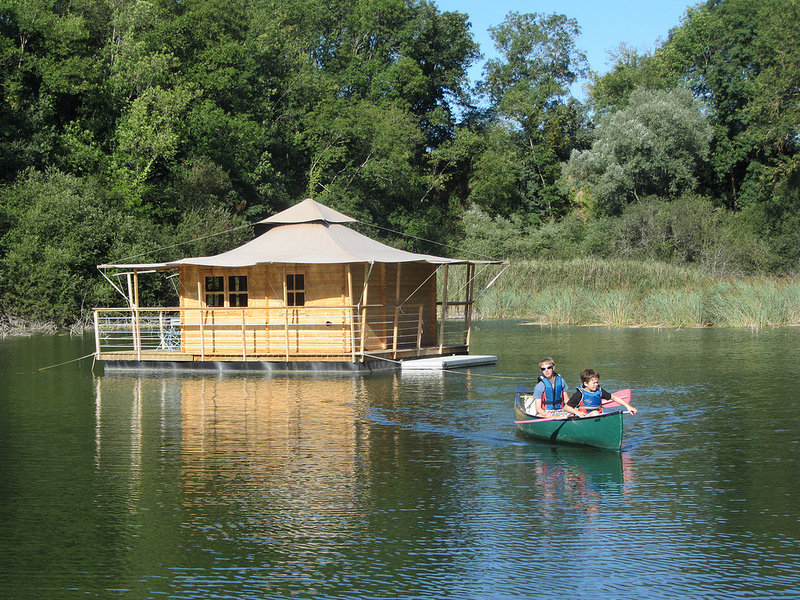
    Catherine's canoeing out to their beds at Echologia
    Catherine’s canoeing out to their beds at Echologia
  3. Creative – This is a tough one as creativity oozes from every project I visit, but I think Echologia in the Mayenne region of France wins my creative prize this year.Apart from their website, that is, which has a way to go, but I forgive them as they have put all their creative energy into their stupendous eco set up. The proper name is actually EcH20logia, because this extraordinary 70 hectare site revolves around water, ecology and lodgings, with three disused limestone quarries offering natural gems of a getaway now that their underground water sources have been allowed to seep back up to the brim again.  Poised in and around these teal coloured water holes are a collection of twenty different places to stay, from yurts spread across a wild meadow, tipis within diving distance of the natural reed filtered swimming pool, cabins poised among the trees which overhang the waters or two cabins which float serenely in the middle of one of the basins. And all the creative vision of a group of local men and women who wanted to bring this dead space back to life again. Their vision is Zen like, but not in a purist, whispering way. It’s just about chilling in nature really and their act of replacing a loud, industrial space with something so natural is worthy of praise.

    homebanner-spring4
  4. Empathetic- This is a tough one, but when I get a room full of food producers and tourism providers who just thrive on local sourcing, I really start to feel the love. Connecting tourism with local producers is when responsible and ethical tourism starts to kick ass. There are so many tourism businesses which go the extra mile to ensure that they source their food locally, totally empathising with the farmer down the road and working hand in hand to create the most deliciously local experience. In Ireland,  John and Sally McKenna’s Guidebooks , Best Restaurants and Best Places to Stay not only capture all the flagships of local produce in Ireland, but are written with total empathy and love for everyone mentioned in the book. Organic Places to Stay website has a wonderful selection of places to stay all around the world, which use organic and local produce. I am totally in love with the small island site, Real Island Foods on the Isle of Wight just off the South coast of England, where you can order all your local produce before you arrive, so that it is waiting at your self-catering accommodation when you arrive. Surely a model to emulate in other small destinations? Other websites in the UK which promote the food of love include farmison.com which has a plethora of farm to fork food and bigbarn.co.uk which is a great short cut to finding local producers on your travels. Just enter a postcode to find your nearest market, farm shop, artisan producer etc. Please feel free to comment on this below if you have found similar food tourism networks around the world, so that I can spread the word, and provide the ultimate feast of tourist sites with local food at

    John and Sally McKenna's Guidebooks to Ireland
    John and Sally McKenna’s Guidebooks to Ireland

    their core

  5.    Curious – Well, I guess I have to come back to travel writers for this one.  The people who love to dig and delve, but who also put responsible tourism at the heart of their work. Twitter has been a wonderful way for all of us to communicate and share ideas, and so here is a shout out to some of my favourites. Gail Simmons  (@travelscribe)  writes about the Middle East with great wisdom and sensitivity and has been Highly Commended at the Virgin Holidays Responsible Tourism Awards twice. She has introduced me to the wonders of Palestine and the exciting tourism developments happening at The Siraj Centre . Caroline Eden (@edentravels) works a lot in Asia and was also Highly Commended at the Virgin Holidays Responsible Tourism Awards 2012. Matthew Teller is also rather brilliant on the Middle East, and is a wonderful commentator on Twitter too.  Kevin Rushby is The Explorer for The Guardian newspaper and he is, basically, just too cool for school and I am at my greenest when reading his work….with envy that is! Richard Hammond of the UK’s Green Traveller website wrote the green travel column in The Guardian for years and then went on to found his website, which features hundreds of green holiday ideas all of which are  accessible by train. He also has a writers’ blog on his site which he contributes to regularly as well as a team of other writers. Such as Paul Miles who lives on a houseboat and so no better man for writing about slow travel and slow living (@Travel_n_green), Rhiannon Batten – the author of Higher Ground: How to travel responsibly without roughing it, and also regular feature writer for The Guardian and The Independent in UK (@rhiannonbatten),  and Jeremy Smith who is former editor of The Ecologist magazine and starting to write a lot about wildlife conservation via his blog Fair Game and on Twitter @jmcsmith.
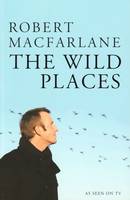
    The Wild Places by Robert MacFarlane
    The Wild Places by Robert MacFarlane

    Jini Reddy is one travel writer I would love to travel and work with one day. She just seems to sing from the same songsheet as me, as you can see just from her trip portfolio, which includes  a canoe trip along Botswana’s Selinda Spillway and taking tea with the women of Pakistan’s pagan Kalash tribe (@Jini_Reddy). And last, but not least, Leo Hickman, environment editor for The Guardian newspaper in the UK, who also wrote the wonderful book on responsible tourism – The Final Call. He is also very active on Twitter, so follow and fall in awe, like I do every time I read his fine pieces of journalism, such as this recent one on flying and climate change. And to conclude, the Saint of all travel scribes, Robert Macfarlane , whose books seem to glow on my bookshelves telling me to pick them up and read them again and again. If you haven’t treated yourself already, check out the ever curious compositions  of this extraordinary travel writer in The Old Ways: A Journey on Foot (2012), The Wild Places (2008) and Mountains of the Mind: A History of a Fascination (2003)
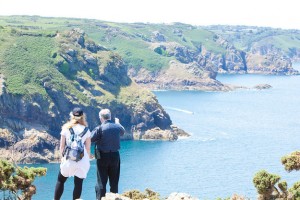
    Catherine, totally grateful to be walking in Jersey
    Catherine, totally grateful to be walking in Jersey
  6.   Grateful –Well, asI get to share Tweets,  cross paths and go on journeys with nearly all the above, who  else could be more grateful than me, of course?

 With thanks to Ron Mader and all the participants of #rtweek2013 and #rtyear2013, as well as all my fellow travellers.
WTTC Launches 2013 Tourism For Tomorrow Awards

The World Travel & Tourism Council (WTTC) is inviting tourism businesses, organisations, and destinations worldwide to apply for its prestigious Tourism for Tomorrow Awards.

Each year, the Tourism for Tomorrow Awards recognise global leadership in sustainable tourism best practices. Due to its rigorous three-step judging process involving 22 independent expert judges from all around the world, and including an on-site evaluation of all award finalists, the Awards have become one of the highest accolades in the global Travel & Tourism industry.

Applicants should demonstrate how they are actively engaged in a successful programme of sustainable tourism practices and management, including maximising social and economic benefits for local people, reducing negative impacts to the environment, and supporting the protection of cultural and natural heritage in destinations where they operate.

Award applicants may enter in one of four Award categories: Global Tourism Business, Conservation, Community Benefit, and Destination Stewardship and can submit their entries online at www.wttc.org/tourismfortomorrow until 26 November 2012.

David Scowsill, President & CEO of WTTC said: “The Travel & Tourism industry has immense influencing power and has the potential to raise awareness and initiate action on the sustainability agenda among consumers, employees, and governments.

With its ninth year under WTTC stewardship, the Tourism for Tomorrow Awards are rewarding top sustainable tourism practices globally. These are outstanding examples, reaching new heights in the world’s sustainable tourism advancement.”

Finalists and winners receive complimentary flights and accommodation and will be recognised during a gala Awards ceremony which takes place alongside WTTC’s Global Summit in Abu Dhabi, UAE on 9 April 2013, attended by Travel & Tourism industry leaders, government representatives and members of the international media.

Costas Christ, Chairman of Judges, stated: “A tremendous amount of work goes into the Tourism for Tomorrow Awards each year. These Awards are truly global in nature, with a team of nearly two dozen judges from all around the world, ranging from indigenous tourism leaders to international sustainable tourism experts, and hailing from Africa, Asia, the Americas and Europe.

One day there will be no need for Awards that recognise sustainable tourism best practices. Care for local people and the planet will simply be a part of how every tourism business operates. Until then, the Tourism for Tomorrow Awards are shining a light on the sustainable tourism visionaries of today that are helping to lead the way forward.”

In 2012 ‘Destination Røros,’ won in the Destination Stewardship category, ‘Saunders Hotel Group’ won the Community Benefit Award, ‘Inkaterra Peru’ won the Conservation Award and ‘Banyan Tree Hotels & Resorts’ won the Global Tourism Business Award.

The strategic partners of the 2013 Tourism for Tomorrow Awards are Travelport and the Travel Corporation’s TreadRight Foundation.


The people who created the beautiful Bivouac, Yorkshire

A Bivouac shack Photo: The Bivouac

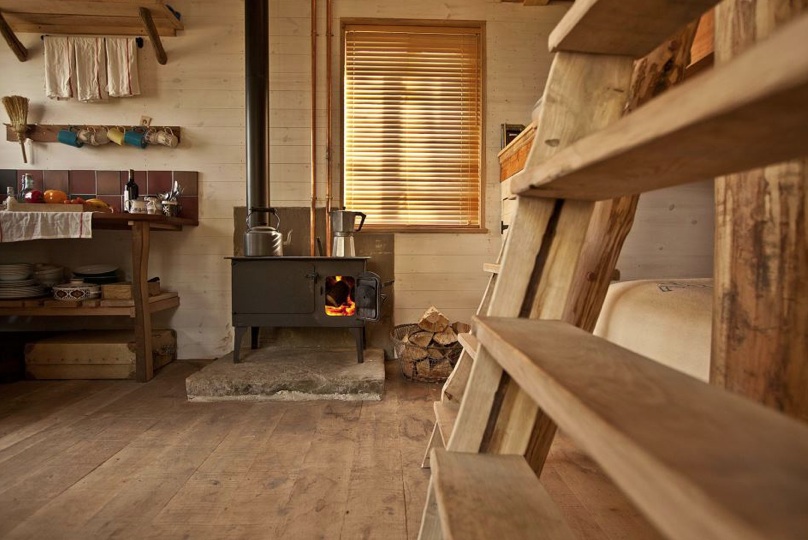
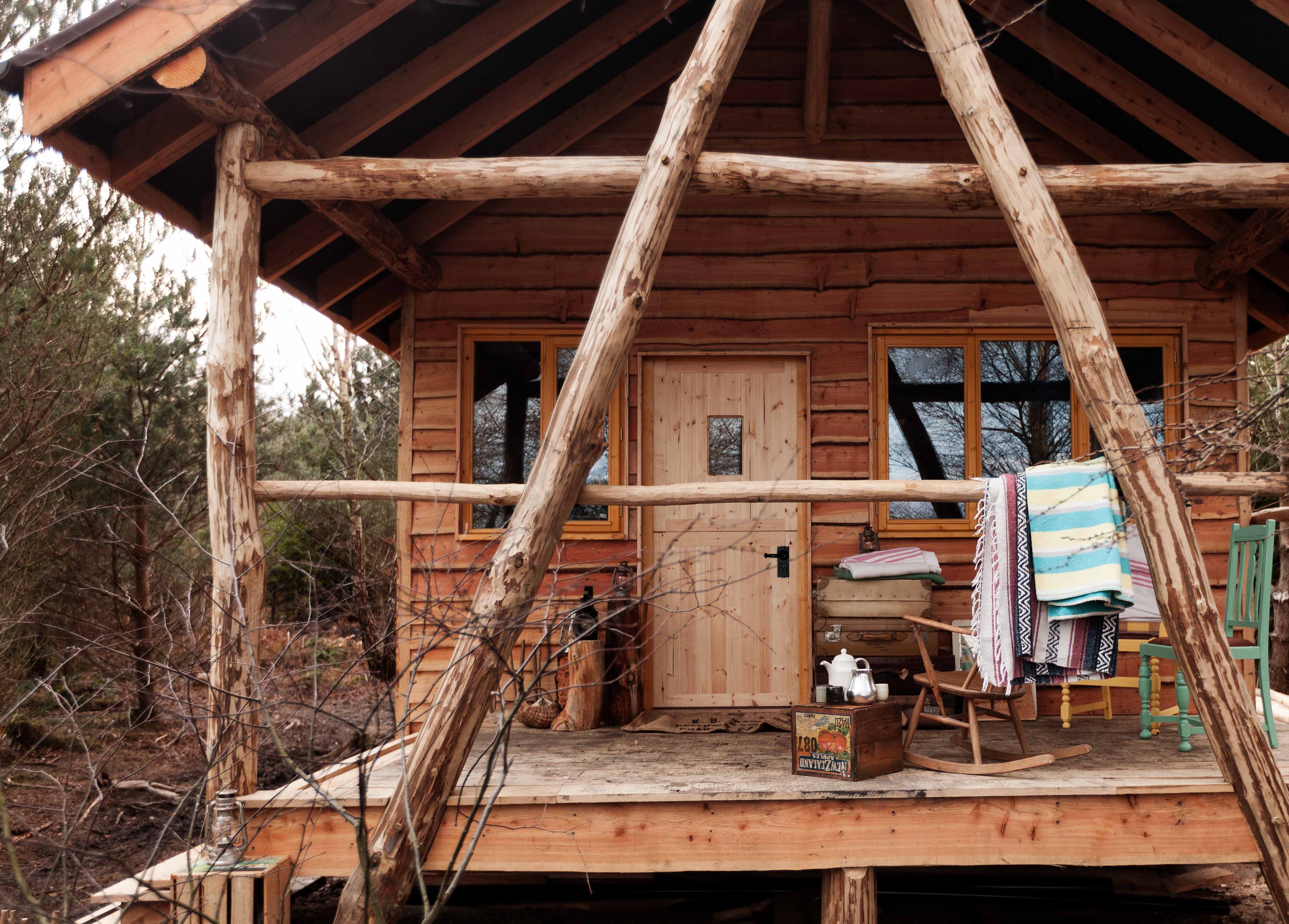
I wrote a blog a few weeks ago about the people I meet in this field of ‘responsible tourism’, and how sometimes, it is the they who make us want to visit a place. Their stories, their commitment, their love of a region. So, let me introduce you to Sam and Beth Hardwick, the owners of Bivouac, one of the most stunning campsites in the UK , located in Yorkshire. I don’t want to put it in the ‘glamping’ box because it is something more than this somehow. As a result of my chatting with the Hardwicks, I invited Beth to write a guest blog for me, to share her story of how The Bivouac was born. Because I do firmly believe that it is the people who make the place. Over to Beth….with thanks.

“Sam and I worked long hours during our dating period. I had my own business and he worked in the city. We decided that when we got married we’d quit our jobs and go traveling together for some proper revaluation time. We backpacked around the world talking the whole time about what we believed in; what made us who we are; what inspired us; how we wanted to live; what we were good at and no so good at. Some key themes came from this such as community, faith, family, sustainability, simplicity and nature. There was a lot more talking … and then Bivouac fell out.

So we came home, rented out our house and converted a garden shed to live in whilst we began building the dream.  It was a very long up and down journey through finding land, gaining planning permission, getting a government grant and raising a family all at once. The initial plan was that this Bivouac adventure would add massive value to our family, but at times we felt we had lost that ability as our family life got more disjointed as we got further in. But now, even though we have to work really hard, this was the best thing for family life.

Bivouac Interior Photo: Bivouac

Family life means a great deal to us. Bivouac is a place where we want family life and spending quality time together to be inspired again and time and space is given to just being together, in the outdoors, in our activities or cozy by the fire.

We have had our own family torn in bits with the death of our third daughter Florie Briah. She caught a nasty virus and was not old enough to fight it and she died from the damage to her heart that it caused. This happened just as the thirty or forty guys arrived on site to build the project with us. It was like living in a nightmare which couldn’t stop or slow down. We had folk living with us, needing us each day, when all you want to do is hide and catch breath. But, the flip side of this is that everything we believed we were building, community, and ethos of family and friendship, transparency, creativity – it all came into play in that season and I knew then, no matter how hard things were – Bivouac had been birthed. In Florence’s memory we are raising money to build a natural play park here on site. Free to use and designed for families to play, laugh, relax and reconnect.

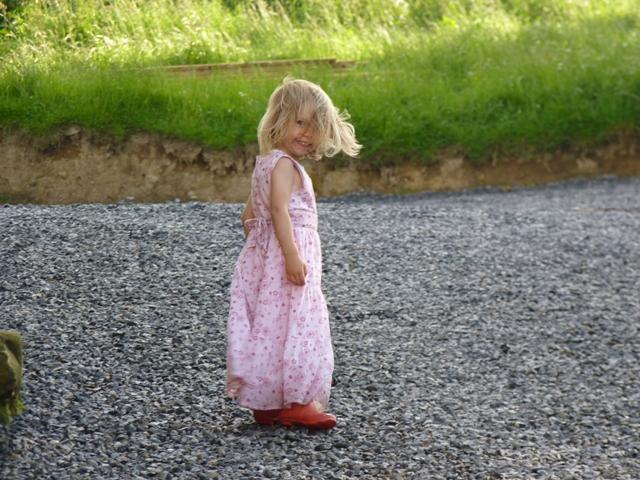
We have Martha Willow 4, Elsie Myla coming up 3, full of life, creative and amazing company. We are a long way off where we hope to be, but this place is something special and I am so very privileged to have time here with my family, building something for other folk and us to all enjoy and take a part in. Bringing back something about life which might get missed far too often”.

Photo copyright: Bivouac

For more details on Bivouac, see www.thebivouac.co.uk

Urgent appeal to keep Goa ‘going with the flow’

If you love Goa, then you have a chance to take action to preserve its most vital resource – water. There are so many injustices going on with relation to water that the majority of tourists don’t have any idea about, and the fact is that water which is being made available to tourists in contrast with that available to people who live there has hit crisis point. Which is why I am asking you to urgently sign a petition to the Goan government, as part of an campaign led by Tourism Concern, the Council for Social Justice and Peace (CSJP) and Eco Footprints to urgently address the overexploitation of Goa’s water resources by  a growing numbers of resorts and hotels.

Petitions do make a difference, especially when they have an heap of tourists behind them, upon whom Goa’s economy heavily depends. New research by Tourism Concern entitled Reclaiming Water Rights – Towards and Equitable Social Contract in Goa will also give a strong spine to the petition landing on the Ministers’ desks, which indicates that the luxury tourism sector is being prioritised over domestic and small-scale livelihood needs.

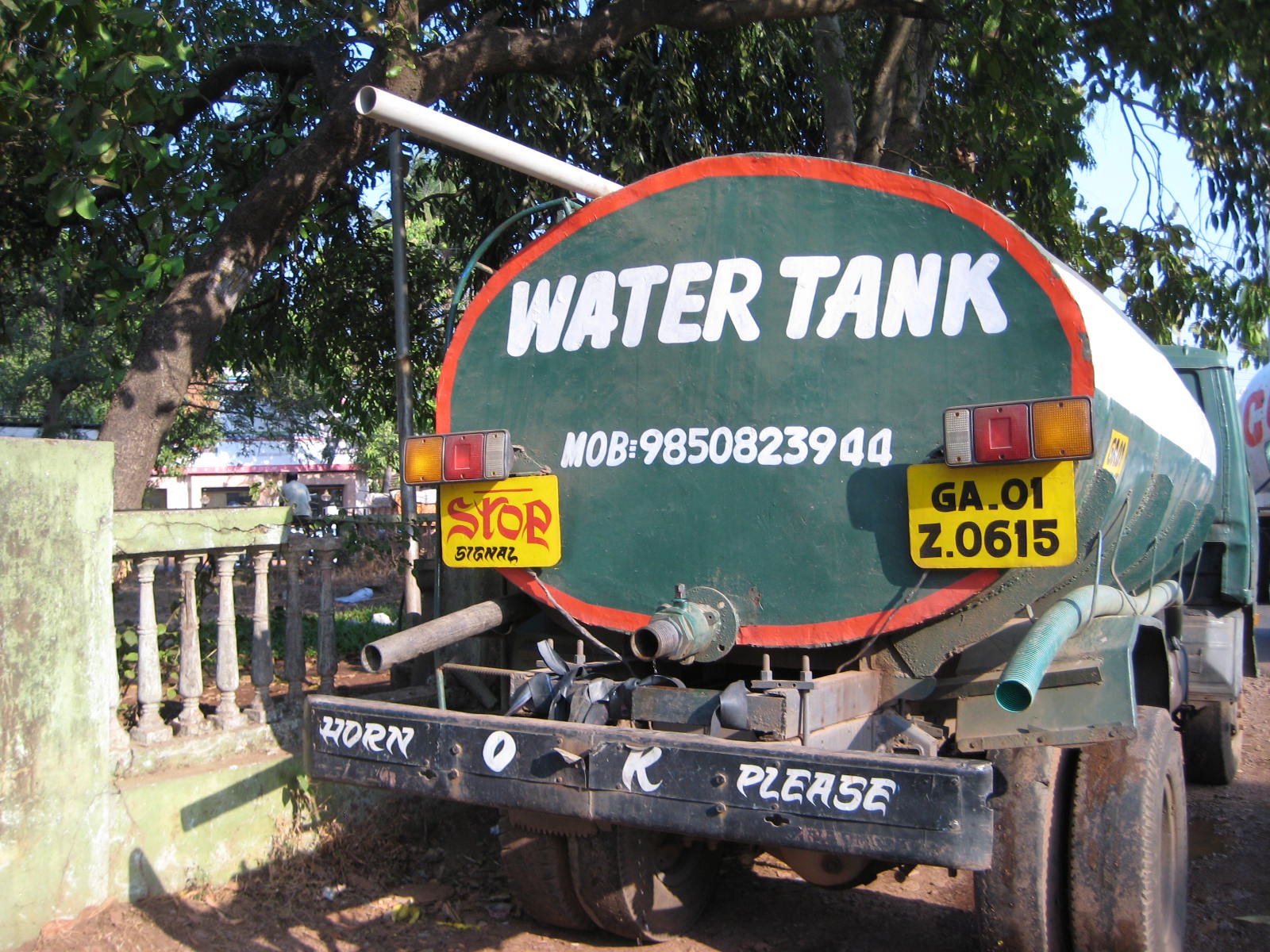
For example, findings show that residents in the popular resort town of Calangute receive piped water for just two hours every two days. Traditional community wells are becoming unusable due to pollution and over-extraction, forcing a growing dependency on inadequate public supplies and infrastructure. Meanwhile, nearby resorts boasting swimming pools and golf courses enjoy a continuous water supply. One 5-star hotel in Benaulim consumes up to 1,785 litres of water per guest per day, compared to just 14 litres per day by neighbouring villagers. One guesthouse owner in Calungute comments,  “The wells here have been contaminated for 10 years. The contamination has been partly caused by soak pits from tourism. Dirty water leaches into the ground. The soak pits are illegal. In the hot, dry season – March, April, May – we get water for 20-30 minutes a day…. Many people depend on tankers.   Local people sometimes feel angry, but they recognise the benefits that tourism can bring. But it is we ordinary people who are suffering. We are drinking this water, they are not. Some can afford to buy water, some cannot.”

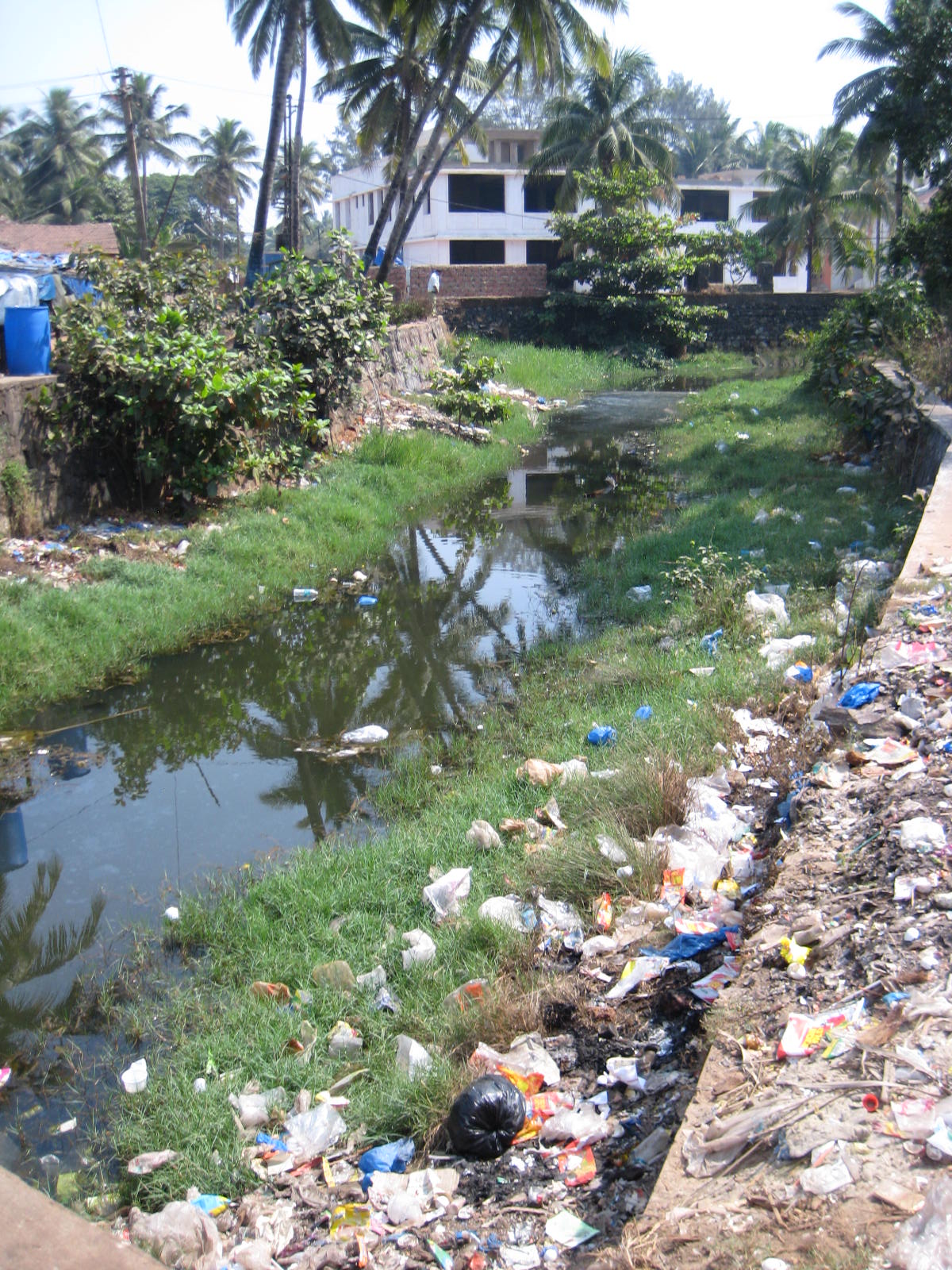
Dumped waste and sewage behind hotels at Colva Creek Photo: Tourism Concern

It does not mean that you shouldn’t go to Goa, enjoy your pool, shower or golf course, although using water responsibly, just as we do at home these days, does help.   Real immediate change must start at government level, so that urgent improvements can be felt straight away among the local population, who need water urgently.  “The Government of Goa must respond to this critical issue and implement the recommendations of our report, Reclaiming Water Rights – Towards an Equitable Social Contract in Goa. We urge them to instigate a clear regulatory framework for water and tourism management, implement existing laws and improve infrastructure to ensure community water rights don’t come second to major resort developments”, says Mark Watson, Executive Director of Tourism Concern.

The research simmers with discontent, quoting many local people who are now panicking about this life threatening issue. Geraldine Fernandes, another guesthouse owner in Benaulim says, “I have a well, but the water level is going down.  When they build these new developments they dig a borewell with a pump. My well water has significantly declined. I’m now running dry by February… There’s so much environmental destruction and garbage, and lack of proper sewage treatment… We are not anti-development; we want development that protects our livelihoods.”

So please, if you love Goa, take thirty seconds and sign the petition here to keep Goa going.