Kayaking and seaweed foraging in West Cork

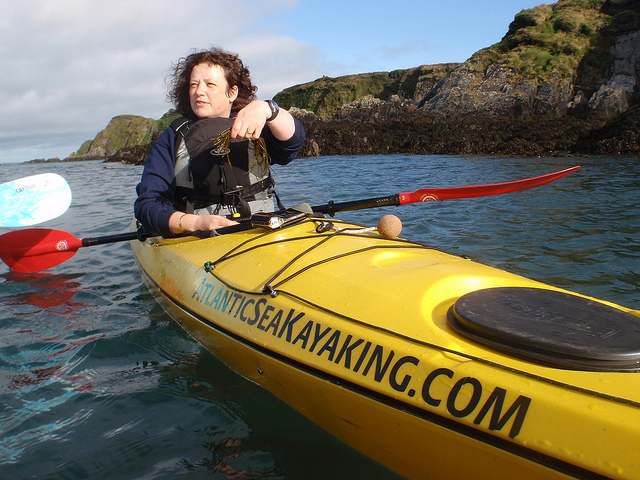
Sally Mckenna of Atlantic Sea Kayaking showing me some seaweed samples Photo: Catherine Mack

It is no secret that Ireland has some of the world’s finest weed. Not only that, it is in plentiful supply, cheap and and it’s a superfood. The weed is, of course, seaweed, and anyone who has had a seaweed bath will not need convincing as to its benefits.In terms of sustainability, seaweed is also a no brainer, and so it is exciting to see that the Inchydoney Island Lodge and Spa in West Cork has created a two-night “Seaweed Experience” package which has you living and breathing the stuff. And not just within the confines of a spa either.

Realising that many people are now looking for a low-impact, green, activity-based break, not just a lie in the spa, drink and eat all weekend sort of a break, Inchydoney may inspire others to follow suit and get their guests teaming up with local, green activity providers, nature experts and guides.

Inchydoney has picked two of Ireland’s best: expert kayaker and local marine life font of knowledge, Jim Kennedy of Atlantic Sea Kayaking, who brings guests out on local waters alongside Sally McKenna, of the Bridgestone Guide fame, who has successfully combined her food knowledge with a passion for paddling to bring people seaweed foraging.

Over the duration of a day on the water, I learned kayaking skills with Jim, whose sense of humour and reassurance that kayaking is a gentle sport for all ages, and not for adrenalin junkies, immediately put me at my ease. He led me into hidden caves and coves and from island to island, pointing out seabirds and seals and keeping an eye out for dolphins. Suddenly, as we emerged from an explorative paddle, Sally would appear out of nowhere, full of child-like excitement about a certain kelp or wrack she had found, so we all paddled over to study it, harvest some carefully to allow regrowth, taste a bit, and learn about its growth patterns and healthy properties.

Sally’s love of this most underrated food source, from how it grows to how to eat it, was totally infectious. We stopped for lunch on a deserted island, where she prepared dulse and potato soup, served with scones made with laver seaweed and served with dulse and lemon butter. All merited a Bridgestone plaque, I should add, not forgetting a kelp and carrot cake. By the end of the day, I had noted down all of her seaweed recipes, books for further reading, and vowed to bring my kids foraging as soon as possible. You’ve got to watch this weed thing, it’s addictive.

Day two at Inchydoney fed my addiction even further, except that this time it was me who was covered in seaweed (a dried version combined with green tea), then wrapped up in heated blankets and left to cook for 20 minutes. Then into a seawater massage bath, with jets to discover all those coves you never knew existed, followed by a couple of hours flitting between Inchydoney’s heated seawater pool, steam room and jacuzzi. All topped off with a walk on Inchydoney’s famous
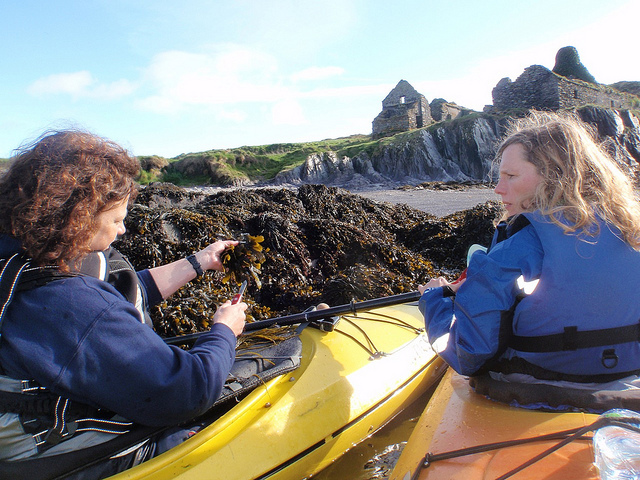
Catherine and Sally harvesting seaweed off the coast of West Cork

white strand, close enough to walk barefoot from our room with a view of the Atlantic.

But really it was the day of paddling and exploring, learning and laughing out on west Cork’s waters which makes this trip extra special. It is not surprising that Atlantic Sea Kayaking was recently chosen as one of Trip Advisor’s Top Ten “Most Exciting Alternatives to the Typical Tourist Holiday”. Fair play to Inchydoney for celebrating and supporting such an ethical activity provider, and bringing them to the attention of those who might not otherwise find the world that awaits them, beyond the spa and into a world of bladderwrack bliss.  You can also watch a video of my (sorry it’s a bit windy) experience here.

This article was first published in The Irish Times
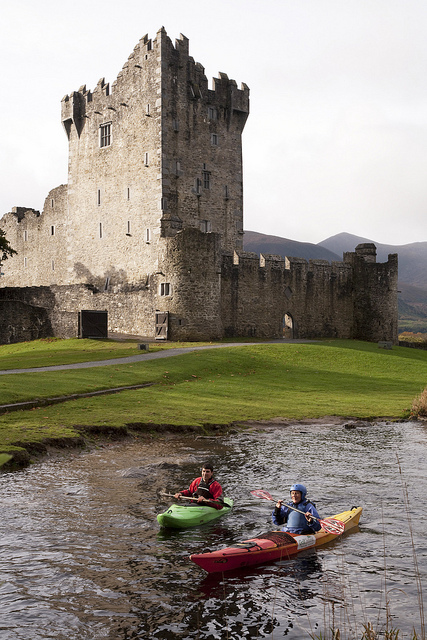
 

The inner green Ring of Kerry

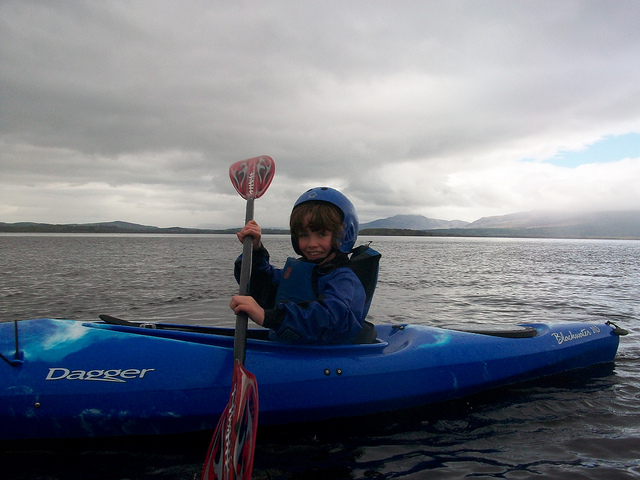
Catherine's son paddling across Lough Leane in Kerry Photo: Catherine Mack

If you think that the Ring of Kerry is just for coachloads of tourists, it’s time to head ‘off piste’ with a man who knows the best shores to paddle off, peaks to conquer, and cliffs to climb  Nathan Kingerlee, founder of Outdoors Ireland (outdoorsireland.com), mountain guide and expert rock climber, is also the man who recently wrote a blog about hiking round Ireland with a dog and a goat and, when you’ve read it, you will know that this is the guy to lead you safely up to the summit of Carrauntoohil or, in my case, across Killarney in a kayak.

Before heading off on an all day paddling session, Nathan gave us some kayaking tips on the reed covered shores of Lough Leane and, as a passionate proponent of Leave No Trace (leavenotraceireland.org), he told us to ensure that we did just that on our day on the water. We left Killarney’s tourist filled streets behind and gently paddled out into a totally tranquil lough. It felt like a totally empty lough too, with Nathan saying that the tourist boat traffic stays over on the other side, so we had massive expanses of Kerry water all to ourselves for the rest of the day

With just enough wind to help us across the lough, but also to make us work our muscles when we changed direction, we certainly earned our lunch. We tucked into picnics on the water’s edge, sheltering from a shower on the edge of Tomie’s Woods, followed by a quick walk up to admire O’Sullivan’s Cascade. This stretch of ancient woodland is spectacular, and accessing it by boat might certainly have been a better approach for some man who, according to Nathan, got lost for three days in this, some of Kerry’s densest forest. Warmed, re-energised and back in our kayaks, we gently followed the shoreline to the point where the River Laune meets Lough Leane, and took our final glances of the magnificence that is Macgillycuddy’s Reeks from the water, ending with a lash down the rapids leading to Beaufort Castle, with Nathan able to identify each peak, point out nesting eagles, and teach us how to ride the rapids all at the same time, in that multi-tasking outdoorsy way that I am totally in awe of.

Outdoors Ireland is part of a network of Kerry businesses to have joined the Green Tourism Business Scheme (GTBS), a UK certification scheme brought in to help them achieve green status as a region. All participants are listed in brochure called The Greener Side of The Ring of Kerry, downloadable free of charge from Discover Ireland. Some are greener than others, however, with Gold award winners like Outdoors Ireland leading the field, and others still at the early stages of green practices with a Bronze award, although this range isn’t clear from the brochure. For my kayaking trip, I chose an accommodation which had been awarded the Gold award, Salmon Leap Farm, a traditional farmhouse b&b just outside

Paddling down the River Laune in Kerry Photo: Outdoors Ireland

Killarney whose green practices are clearly listed on their website.

The GTBS is now one of the several green certification schemes recognised by Fáilte Ireland, with others including the EU Ecolabel, Greenbox Eco-certification and the Green Hospitality Award. In a land where there are forty shades of green, it sometimes feels as if we are getting as many shades of certification schemes, and I long for the day when Fáilte Ireland and the Northern Ireland Tourist Board agrees on one certification which fits all and which embraces all aspects of sustainable tourism particular to Ireland, including access to low carbon transport facilities and, ultimately, creating a clearer, simpler picture for tourists and businesses alike.

In the meantime, Outdoors Ireland certainly meets the criteria for any gold and green award, with Nathan not only sharing his skills relating to excellent low carbon activities, but also guiding us with an expert knowledge of the local ecosystem.  You mightn’t do the whole ‘Ring’ thing with Nathan, but the 24kms of Kerry which I saw from a kayak are some I will never forget. Goodbye Celtic Tiger, hello Celtic climbers and kayakers, where the future is green and raring to go.

An edited version of this article was first published in The Irish Times


Inis Meáin – my Christmas best

Photo: Inis Meain Restaurant and Suites

Few things in life beat a wish which actually comes true. This time last year I wrote a New Year’s wishlist, which included a mission to visit more of our stunning islands. First, a trip to Cape Clear made me smile and celebrate our natural heritage, but a trip later in the year to Inis Meáin, one of the least visited of the Aran Islands, actually made me cry. In the same way that a fine work of art makes me cry, or a stunning piece of writing,  or just an overwhelmingly kind gesture. I experienced all of this on Inis Meain, staying at Inis Meáin Restaurant and Suites, a place where I felt all my travel writing Christmases had come at once.

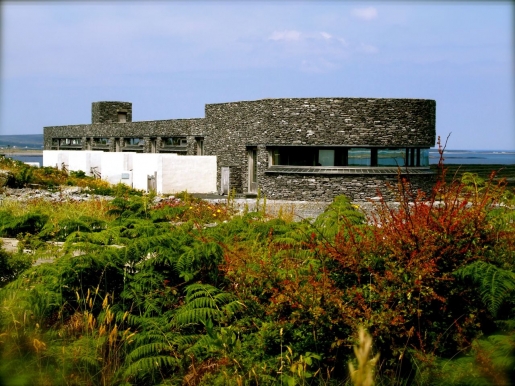
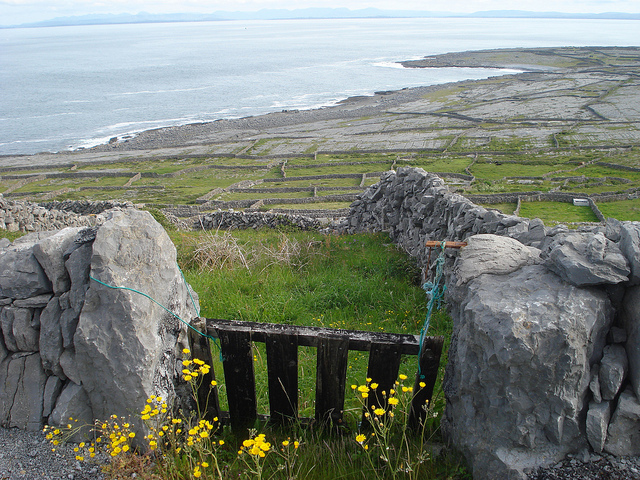
Inis Meáin is a place of solace and reflection and Inis Meáin Suites has been designed with this in mind. As the only hotel here, it could have made a big splash, but instead its architect opted for a native limestone façade, with just enough glass to reflect the soft, luminescent blue sky, creating a long, low-lying building which segues seamlessly into the matching limestone terrace. This is just one of hundreds of hard-

Monkfish and spuds at Inis Meain Photo: Catherine Mack

won terraces, so characteristic of the Aran Islands, stretching out in every direction like veins across a body.

Indeed, Inis Meáin Suites plays the role of a central artery on the island, providing tourism income which is sustainable in a sumptuous, seductive and yet sensitive way. Sustainability is core for its owners, Ruairí and Marie-Thérèse de Blacam. Ruairí is chef in his own restaurant, where the food has already won endless accolades from the gastro press. Before dinner, he showed me his impressive fields of vegetables, free range chickens, cow and piglets.  As we walk past one barren field after another, all enclosed by the famous stone walls,  I realised it’s not long ago in the island’s history that this land was considered impossible to cultivate. However, the local people created soil from sand and seaweed and, having grown up on the island, Ruairí seems to have inherited some of this determination to create life and sustenance out of the rock.

How far this island has come, with developments like the hotel’s water harvesting system which enables the use of grey and rainwater, helping in the creation of  salads, herbs, cabbage, spinach and spuds. Later in the restaurant, his inspiration seeps through every mouthful of his food too, as we watch him produce lobster salad, monkfish and dry aged sirloin from his open plan kitchen, chatting with the guests as he merrily chops, sears and simmers.

The de Blacams want you to savour every bit of Inis Meáin, so even though you have the luxuries of an enormous whiter than white bed, chilled champagne, white robes and alpaca throws, the call of the land is too great. They leave bikes outside each suite, as well as swimming towels and a fishing rod. I managed to avail of all three and, along with my hiking boots, was able to reach the less accessible coves and cliffs, allowing me to live every moment here. I even caught some Pollock off the pier, which Ruairí prepared as a starter later – not just thrown in a pan, but sashimi

Photo: Catherine Mack

style, sprinkled with sesame seeds, ginger and a bowl of wasabi sauce.

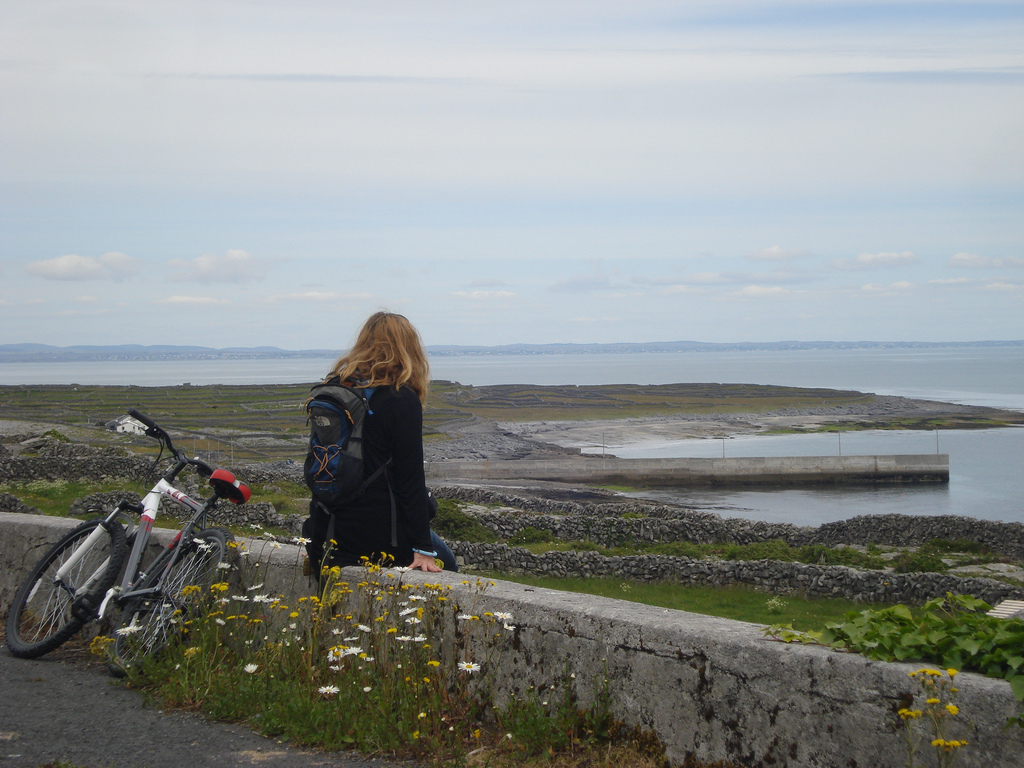
Walking is the only way to truly imbibe the wild, desolate and totally intoxicating beauty of Inis Meáin. The de Blacam breakfast is strategically generous, so that you can pack the leftover boiled eggs, salami, cheese and homemade bread into your bag for a good long walk. Don’t miss the wilder south west side of the island which took me a good four hours, as I navigated my way across the mad, craggy, limestone cliffs, constantly stopping to try and get my head around these unique and awe inspiring seascapes.

This is a pricey getaway, with suites €250 per night and a minimum 2 night stay. But if I could pick one ethical travel treat as a voucher for someone this Christmas this, without doubt, is my top tip. Because although I generally adore the solace of islands when travelling alone, Inis Meáin evokes such poetry and passion, offers such mystery and magnificence, that it is just one of those special places which begs to be shared with someone you love.

Photo:Catherine Mack

This article was first published in The Irish Times
Responsible tourism is on the move

Photo: Cotswolds Conservation Board

Sometimes people take the proverbial when I talk about responsible tourism as a ‘worldwide movement’. I try and make the point that it is not just for hippies and ecowarriors, or about solar panels and changing towels, but that the very core of tourism is changing. This change has been led not only by switched on businesses, but also by growing numbers of tourists who realise that their impacts on local economies, resources, culture and communities can be hugely detrimental.

There are times when I lose the faith, however, when profit-before-people tourism seems to be taking over. There are too many examples of senseless destruction to list – we have all seen them on our travels I am sure, from Donald Trump’s highly questionable plans to build a golf course on one of Scotland’s most stunning coastlines in Aberdeenshire (check out the website youvebeentrumped.com about the superb film which questions the ethics of this project), to the blatant abuse of human rights in the name of tourism.

Then suddenly I see the movement lashing into the mainstream again, and my faith is restored. The last two weeks saw two incidences of this. First, in the South East of England, where nine Protected Landscapes have united on one website called our-land.co.uk, to promote their sustainable tourism businesses. More than a third of England’s South East region is officially classified as Protected Landscape and employment in tourism in these areas is around double the national average at almost 20%, in some cases is much higher, such as on the Isle of Wight (one of my favourite places for what it’s worth), where it accounts for 41%.

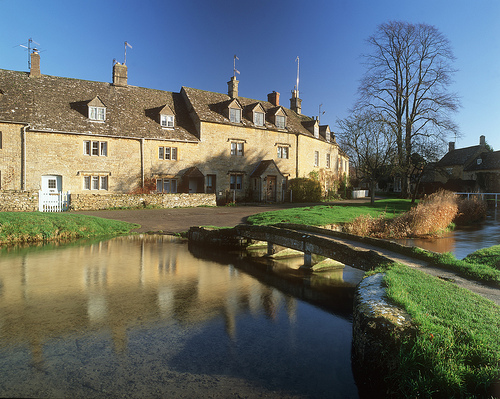
The Protected Landscapes consist of two National Parks and seven Areas of Outstanding Natural Beauty (AONB): the Chilterns, Cotswolds, High Weald, Isle of Wight, Kent Downs, New Forest, North Wessex Downs, South Downs and the Surrey Hills, some of these less than an hour from London. Funded by a £1m grant from the Rural Development Programme for England (RDPE), to be spent over the next 2.5 years, it is intended the model will continue to prosper commercially after that and be available as a template for other protected landscapes across the country.

our-land.co.uk is a fine website, where sustainable B&B’s, self-catering properties, small hotels and activity providers can list for free and gain advice on how to put landscape and conservation at the heart of their businesses.  The only condition is that the business must offer something more than just a ‘place to stay’, but ‘provide visitors with a real connection with the people, the landscape, the culture and the environment’. So, if you are planning a trip to London, for example, but fancy a couple of nights away from the madness, this is a top site to get a quick overview into where to stay or what to do in one of these Protected Areas, from farmstays to fishing, walking breaks and walking guides, to thatched cottages and cycling breaks.

Photo: Cotswolds Conservation Board

A very different website also launched ten days ago – a blog called Conscious Travel (conscioustourism.wordpress.com). Created by Anna Pollock, one of the most inspiring speakers on ‘creating change in tourism’ I have ever heard, she has worked with tourism boards around the world to advise on climate change and tourism, sustainability and responsibility. It has developed out of the Conscious Capitalism philosophy, which believes that ‘a more complex form of capitalism is emerging, that holds the potential for enhancing corporate performance while simultaneously continuing to advance the quality of life for billions of people’ (consciouscapitalism.org). Similarly in tourism, Pollock firmly believes there is a worldwide group of Conscious Travellers who, post-recession, are seeking a consumerism which is ‘mindful, collaborative, participative and co-creative.  At the same time there are Conscious Hosts who  areawake, alert and aware’ to changing consumer needs, whose business decisions are values-based, and about collaborating together as communities to help one another.

The Conscious Travel blog is in its early days, but Pollock has spent years assimilating this philosophy and is definitely one to watch. And be inspired by.  Both these sites are fine examples of not only how much the responsible tourism movement has travelled, but how, at this rate, it will be whacking the unwanted and outmoded Trump-like models of tourism straight into the rough.

An edited version of this article was first published in The Irish Times