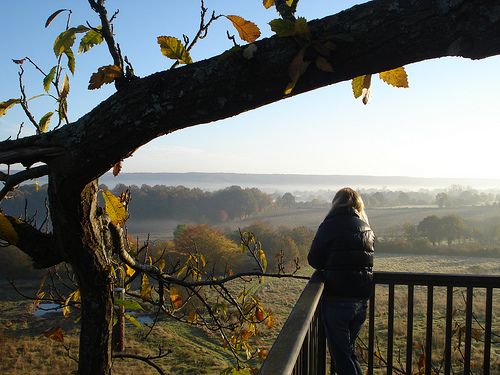
The view from a treehouse, at Perche dans Le Perche, France
Greeny holiday makers are grinning more than non-greenies, a recent holiday survey suggested. I am not sure what I’m meant to do with that information, except feel slightly smug about the fact that I might be contributing just a little to this holiday happiness factor. It’s all a load of nonsense of course, because a person’s holiday experience is affected by so much more than their shower being heated by the sun, or their meals all being locally sourced. The simple fact is that the majority of people I have met who run green tourism businesses, are not only wholly committed to protecting the landscape they are trying to promote, and sustain their local community, but are also good people. Their passion is infectious, and they know how to live life. They are also people who like to do things a little differently from the norm, and want to share some of that with visitors. And this is, for the most part, what lots of holiday makers are after. Something different from their everyday norm. What philosophers call ‘The Other’.
So if you are after that ‘Other’, you are spoilt for choice out there. There are grinning greenies sleeping in treetops, tipis, boats, railway carriages and mud huts in some of the most fantastic locations around the world. There are converted containers at Cove Park in Scotland (www.covepark.org), run by a charity offering residencies to artists. When they don’t have residencies, they hire their self-catering turf rooved ‘Cubes’, overlooking Gare Lough, to people passing through this stunning, remote hideaway on the West coast’s Rosneath peninsula.
Still in Scotland, you can join the Mountain Bothy Association (www.mountainbothyassociation.org.uk), a charity which looks after 100 remote stone shelters for hikers who want to lay their heads down for the night. They are totally basic, with no water, altough there is usually a fireplace, and a platform to lay out your sleeping bag. You don’t book, you don’t get a key, and just like the bears, you do it in the woods. Camping without the tent, really, and of course, you don’t pay.
On to warmer climes, check out the wonderful treehouse I stayed in Normandy last year (www.perchedansleperche). This is all mod-cons, and showering in a tree is something you must try sometime. The best bit is getting a picnic breakfast delivered to your door, so you can enjoy flaskfuls of hot coffee, homemade bread, and other local delights, with infinite views over the surrounding hills. Staying in Normandy, you won’t get too chilly at the Earthship Perrine (www.earthship-france.com), a glasshouse attached to a mound of earth, heated by solar thermal dynamics. The pile of earth conceals hundreds of tyres, bottles, reclaimed wood, Sounds weird, but it is brilliant, and one of those places that
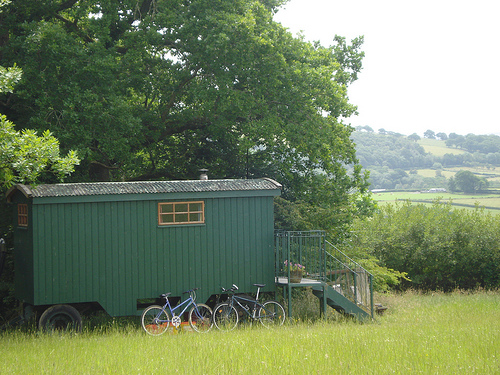
The shepherd's hut at Mandinam, www.underthethatch.co.uk
makes me think, ‘How come we all can’t live like this?’
If trains are your thing, check out the converted railway carriages from award-winning Welsh responsible tourism company, Under The Thatch. They did start putting people up ‘under the thatch’, and then developed the concept to a converted Edwardian railway carriage, a circus wagon, a romany caravan, and many more (www.underthethatch.co.uk).
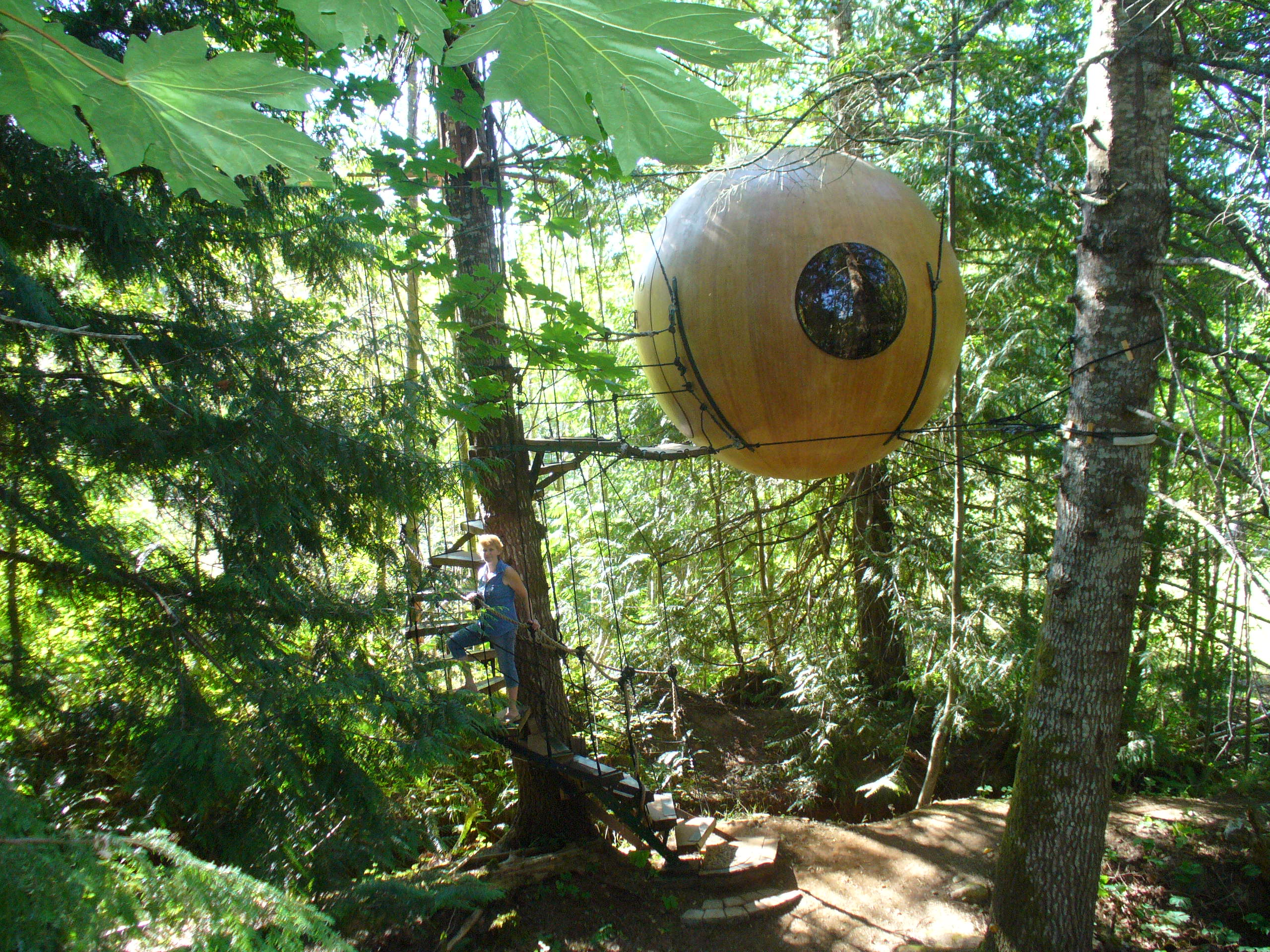
My two favourites for green quirkiness, however, take me back to the silence of the woods. In Sweden, you can stay in a forest hut based on the structure of a traditional charcoal maker’s hut. It looks like something children would construct in the woods, except they have fireplaces and a sleeping space, although the hardness of the ‘bed’ might not leave many greenies grinning in the morning (www.kolarbyn.se). On Vancouver Island, Canada, you will not be able to wipe the grin off yourself when you see the wooden spheres suspended in the canopy of Douglas firs in a private forest. This is arborial art at its finest and, even better, you can sleep in them. Aptly called Free Spirit Spheres, if you aren’t going to free it here, you aren’t going to do it anywhere (www.freespiritspheres.com)
Free Spirit Spheres www.freespiritspheres.com
This article was first published in The Irish Times 22 August 2009. For more ideas on going in search of ‘The Other’, check out gorgeous book, Bed in a Tree, by Bettina Kowalewski, published by DK Eyewitness Travel.
People from Crete consider themselves to be one big family. Just as I, as an Irish person, can’t confuse the origins of someone abroad whose name has the prefix ‘O’, Cretans can spot a fellow islander anywhere thanks to the majority of their names ending with the suffix ‘akis’. Most locals say that it originates from the 250-year Turkish occupation of Crete, which finished in 1898, when the local population was forced to add ‘akis’, meaning ‘little’, to the end of their names. Although, at the time, this diminutive was intended as an insult, it is now considered a patriotic badge of honour.
This is one of the gems of information I picked up at just about the most wonderful dinner parties I have ever been invited to. Hosted by Demitris and Katarina Vamvounakis in a tiny Cretan mountain village called Malaxa, where they recently returned after working abroad for years. Instead of opening a beach café or hotel like so many people out to make a fast tourist buck on Crete, they revived their rural community of a few hundred people by creating a farming cooperative to produce organic food, and started cultural evenings for visitors. This is not the horror of horrors – a touristy cultural evening, with breaking plates, ouzo and dancers in bad national costume. This is the real thing. Over the course of the evening, about fourteen of us drank fine local organic wine, ate plate after plate of superb organic traditional food, prepared by Katarina, as they talked about all aspects of Cretan culture.
Malaxa was one of several suggested outings by our tour operator, Pure Crete, a company which understands that being green on holiday is not all about carbon. It’s also about really supporting the local economy, sustaining local culture and, in short, making sure that our Cretan hosts are not feeling invaded by us blow-ins every year. All of Pure Crete’s accommodation is in villages or small towns and owned by local people. They offer walking holidays with
botanical experts, they list local festivals on their website, and they have an Autumn Environmental week, where you get to see olive presses in action and grapes being gathered for local wine.
We got to sample plenty of previous grape harvests back in Malaxa, where the guests soon lost their timidity with each glass, enabling them to move beyond polite questions about the flora and fauna to more heated issues such as the still prevalent arranged marriages, dowries and macho gun culture. My boys, six and nine, were open-mouthed hearing about the ongoing tradition of men firing endless rounds of ammunition into the air at their daughters’ weddings as a sign of prosperity and pride.
Don’t get me wrong, this was not a culture vulture holiday. It was a family holiday, with a villa, pool, endless turquoise
Where the river meets the sea Photo:Catherine Mack
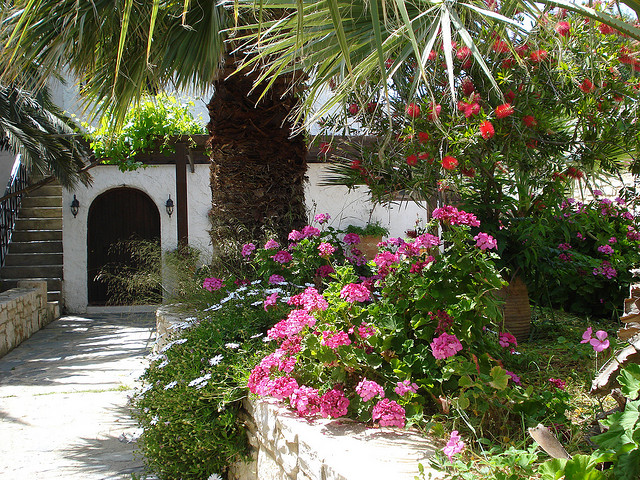
beaches within easy reach, tavernas and copious ice cream. Everyone needs one of those once in a while, but this one ensured that we were really benefiting local people. Our villa was situated in the middle of the hamlet of Megala Chorifia (also known as Aptera for some reason) about twenty minutes drive from the city of Chania, on the Northwest coast. Our host, Stelios Botonakis greeted us on arrival, and showed us around the traditional white stone house, which he had built himself, beside his own family home just on the other side of the tiny square. Overlooking the snow-capped White Mountains and endless olive groves, it was minimally furnished except for elegant simple beds, chairs and tables, all of which looked like precious family heirlooms. Dark wooden shutters, beams and floorboards contrasted perfectly with the white-washed walls, and Cretan hand-woven rugs and cushions threw dashes of warm reds and orange around the rooms.
However, the real glow in the house kicked in later that night, when Stelios arrived with a bottle of his homemade wine as a welcome gift. We insisted he bring his family back over to drink it with us and we quickly threw together a few supermarket snacks we had bought earlier. However there was no need as, one by one, members of the Botonakis family arrived donning gifts of cake, wine, and the local delicacy of cheese pastries, or kaltsounia. Luckily the only Greek word we had managed to learn off by heart before our arrival was for thank-you, Efharisto which, bizarrely, we had been unable to find in the phrasebook, but had asked a Greek person to teach it to us on the plane. However, our boys were passed from lap to lap, sung to, danced with and generally doted over, providing a bridge of contact which meant that language was no longer a barrier. They still treasure their notebooks where the Botonakis teenage children drew them pictures, wrote out Greek translations of their names, and created local maps of beaches to visit and things to see.
Over the next few days we explored many of these recommended beaches most of which were still deserted, being early in the season. Such as Kalathas beach where we swam out to a small island just metres from the shore, which was covered in wild pink flowers and became rock climbing heaven for the boys. However, by the time we swam back to the beach, the place was buzzing with American middle aged men, sipping beers and playing catch with a baseball mitt. I felt as if we had stepped back onto the wrong movie set, but it turned out they were all aircraft engineers from the island’s US military base, just a few kilometres from the beach. I had a surreal conversation, (more monologue than dialogue, admittedly), with one guy who boasted the merits of one military aircraft versus another, as he shouted to the beach barman, “Hey, Bobby, put a bit of Lynyrd Skynyrd on the MP3, willya?”. As Freebird echoed somewhat incongruously across the bay, I freed myself, and went off for a little more peaceful exploration of the shoreline.
Leonidas at Taverna Limonia Photo: Catherine Mack
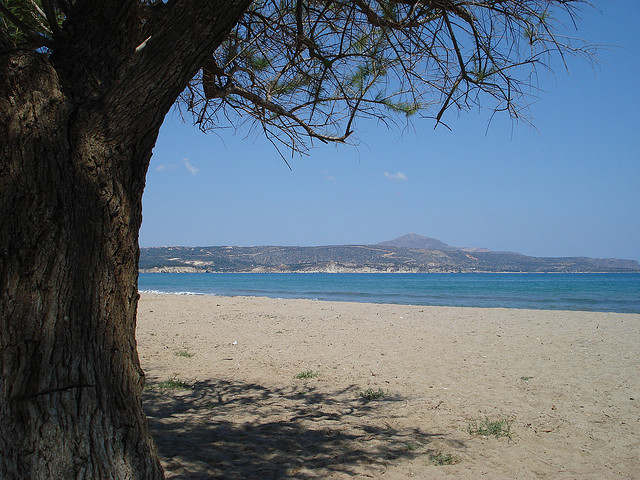
Luckily, there was no military talk at our closest beach Kiani Akti, or Blue Beach as it is also known. This was deserted all day, except for a few sheep in the field beside it. This is one of a few beaches on this stretch of coastline where the mountains’ rivers meet the sea. It was a spectacular feeling, diving into the icy cold river, and letting it carry you speedily into the significantly warmer sea. “The water isn’t salty, Mum!” my younger son shouted, as we swam hand in hand downstream into the surf, screeching in delight.
The most family friendly beach we went to was Almirida, about six kilometres from our villa, and just beyond the relative metropolis of Kalives. Local people smiled at the ‘crazy Irish’ who dared to put their feet in the water before June which, according to Pandelis Botonakis, brother of Stelios, was the start of swimming season for the hardcore swimmers of Crete. My boys immediately challenged him to break this tradition and come swimming with us. “What do you think I am, crazy?” he laughed.
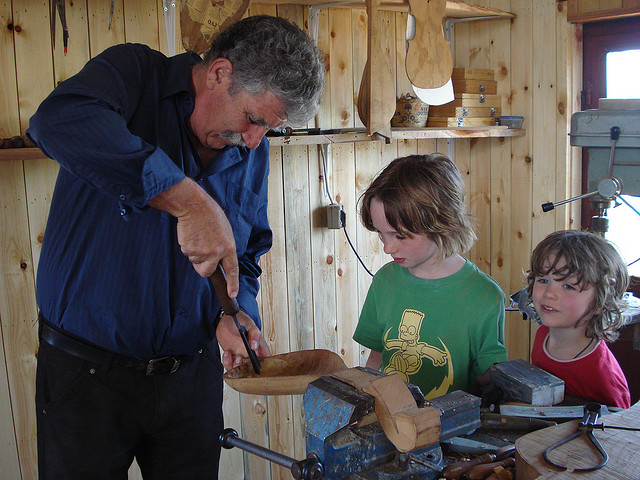
Tavernas are, of course, a major part of Cretan culture, with one at every beach and mountain village, including three in our own village, all excellent. The holiday company also runs a trip into the mountains, where we met the owner of the Taverna Lemonia, a smiling elderly farmer, Leonidas, whose love of traditional Crete was totally infectious. He gave us a tour of the olive oil factory in his back garden, one of the few remaining small farms to still use a donkey to turn the massive stone wheels which crush the olives. We learned about the harvesting process, saw how the traditional machinery worked, all of which Leonidas had constructed himself. This was cold-pressed olive oil, now a rarity in Crete, as heating olives allows for faster pressing, but as our purchased was to prove, a less intense flavour. Our tour didn’t finish there though, because Leonidas is also a master craftsman, and showed us his workshop full of traditional stringed instruments which he makes, bespoke, for local musicians. We were invited into the family house for coffee and cakes and, as we tucked in, Leonidas casually picked up one of his lyres and played for us, with a pride and dignity which brought tears to many of our eyes.
These are cultural exchange experiences which you might fall upon on holiday, if you are lucky, or if you work hard to seek them out. But here is a company which, for twenty years, has been leading people in the right direction to see the Crete which we wanted to see and, most importantly, the bits that Cretans are keen to share and sustain.
On our last night, we invited Pandelis Botonakis and his wife, Liza, to join us for our farewell dinner in Almirida. We were spending the day there, topping up tans before heading back to more northern climes, and were pleasantly surprised to see our new friends arrive earlier than planned. The boys had totally fallen for our ebullient hosts’ charm by now, as had we, and ran over to hug them as they strode across the beach donning their usual warm grins. “Now it is my turn to be crazy”, Pandelis shouted, as he stripped down to swimming shorts, grabbed the boys’ hands, and went running, screaming, into the waves together. It all happened too fast to be photographed, but these memories, like so many of this wonderful family holiday, don’t need to be snapped. They will stay in the heart forever.
For more details see Pure Crete’s website. One week’s accommodation at Anna Malai villa in Megala Chorifia from €1124 (not including flights). Holidays to other locally owned apartments and villas from €594/ week (not including flights), with discounts available for children. Pure Crete also offers activity holidays covering walking, history and conservation. For details, contact info@purecrete.com, 00 44 (0) 845 070 1571
Megala Chorifia – There are three tavernas in the village of Megala Chorifia, where we stayed, and all were lovely. Both Taverna Aptera and Strata Taverna are open day and night is open every day and evening. Both Taverna Aptera and The Cretan Corner taverna was only open weekends when we were there, but day and night during July and August.
Apostolis Fish Tavern, Chania, +30 282 104 3470. If you are shopping at Chania’s market, stroll along the water front towards the lighthouse, and try some eat some Cretan fish at this restaurant, famous with locals, and in a wonderful seafront location.
Taverna Psaros, Almirida, is where we celebrated our last night in Crete with the Botonakis family. A blue and white traditional shoreline taverna, with outdoor seating to watch the sunset over the bay.
Taverna Lemonia, Xilioumoudou , +30 282 504 1459, located in a mountain village with snap ‘til you drop views. It uses only fresh, local produce, including organic meat, cheeses, olive oil and wine and is home to the lyre playing prince of Crete, Leonidas.
What to do
Pure Crete suggests many interesting, optional, green excursions, such as the visit to Taverna Lemonia, and the dinner party in Malaxa. Other interesting trips include hiking trips, and a boat trip to Balos Lagoon. Other trips which might be of interest to someone keen to explore the local culture and environment include:
Visit Chania Market
This is a daily market (not Sundays) with stall after stall of olives, fish, spices, fruits, cheese and many more. This old traditional indoor market is a cultural highlight of any visit to Crete and nearby on Skridlof Street (known as the Leather street) is heaven for bag, belt, shoes and sandal shopping. My son’s leather cowboy’ hat is the best sunhat ever, and look out for traditional hand-carved catapults too. Open 8am-1.30pm, as well as Tuesday, Thursday and Friday evenings.
Walk in the Samaria National Park. Situated on the White Mountains (Ta Lefka Ori) of Western Crete the Samaria Gorge starts at about 1200 metres above sea level at Omalos. The gorge ends about 16 kms (5 – 7 hours walk) later on the sandy shores of Crete’s south coast. There is an abundance of waterfalls and natural springs to cool you down on the way. Open May until October, you need to access it via public transport or on an excursion bus, which Pure Crete can arrange for you. The walk ends with time for a swim, and then a fantastic boat trip back to the other side of the island.
Visit Milia Milia, www.milia.gr/english.html, 30 28210 46774 has to be one of the most exquisitely crafted eco-retreats I have ever seen. Located above the Topolia Gorge in the foothills of the White Mountains, this derelict farming village was restored into a truly green getaway. Tiny stone houses, solar electricity, stream water, on-site organic farm and shop. It is worth the hike up the mountain for lunch, or go for breakfast and take a 45 minute drive to Elaphonisi beach afterwards for a day on the whitest sands on the island (avoid the beach in peak season though, as coaches pour in down the windy roads). Out of season, pure heaven.
Visit the FolkloreMuseum, Gavalohori. This village is a hub of Cretan tradition, with the museum, located in a small Venetian house crammed full of pottery, coins, lace and traditional costumes. There is also a women’s agritourism cooperative in the village, which sustains traditional Cretan crafts such as silk lace making (kopanelli), glasswork and ceramics. For those with a sweet tooth, check out the fantastic sweet shop/cafe in the village, the name of which escapes me, but the aroma of which I will never forget.
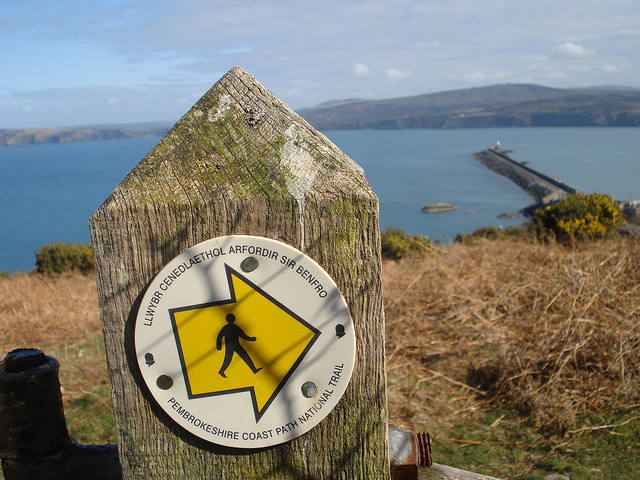
Looking through the visitors’ book at a stunning Welsh farmhouse in the hills overlooking Fishguard Harbour, words like ‘bliss’, ‘peaceful’, ‘stylish’ and, of course, ‘eco’ jump off the page. What strikes me as strange, however, is that apart from me, none of these happy holiday makers is Irish. And yet, Rosslare is only two hours away on the express ferry from Fishguard. For 35 ash cloud safe Euros (plus 8 euros to take your bike) you can walk off the gangplank and straight onto the Pembrokeshire Coast Path, with its 300kms of secret coves and infinitesimal seascapes. Stena Line also does very good combined sail and rail deals (stenaline.ie), with a station at the port for onward travel.
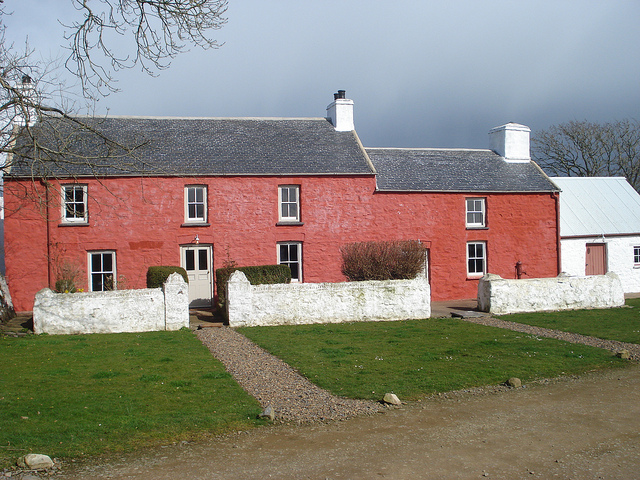
This 1830’s farmhouse, called Trehilyn Uchaf (meaning Upper Heulyn’s Town), has been restored with care and expertise, retaining original qualities, as well as sustaining it into the future with renewable energy, reed bed waste system, sheepswool insulation, and many other natural attributes. Because restoration and sustainability is what Under the Thatch is all about, a Welsh company set up to do just that, and the source of our weekend’s escape. It is also about quality and quirkiness and has won sustainability awards, thanks to the passion of it’s owner, architectural historian Greg Stevenson, who not only likes to see such buildings being used, but used all year round. Thus, he keeps prices affordable so they are always in demand, and remote villages benefit from tourism for more than two months of the year. Such as Fishguard, where he has a few gorgeous places to stay, some walkable from the ferry.
Trehilyn Uchaf itself is pure eye candy for the urban dweller who dreams of a rural retreat. Falling down with Farrow and Ballness, a bathroom that is bigger than my flat, antique furniture, it’s a fusion of classic and contemporary done without a bother. It is also a walkers’ dream. We walk overland to the Pembrokeshire Coast Path, starting at Carregwasted Point, and follow the Path for about 9k.It’s a great place for spotting bottle nosed dolphins too, although a bit early in the year for us, sadly. Later in the season you can do ‘Strumble Watches’ for marine life with Seatrust. A couple of pints and great chips at Goodwick’s Rose and Crown pub at the end of the walk, we collapse onto the Strumble Shuttle bus, which takes us back to the farm.
We have no need for our car, getting supplies at the supermarket twenty minutes’ walk from the port, and then a 7k taxi ride to the farm. Later in the weekend, we head off on a walking trail over the fields to Fishguard, with its variety of small shops for local produce. If you do want to bring a car, there are three other converted buildings on this farm, including an eco-chic converted mill. The whole farm sleeps nineteen people, great for a big getaway, and only one party needs bring a car.
You could extend your stay and take a train or bus to one of Under the Thatch’s other quirky offerings, such as a railway carriage in Cardigan, a romany caravan in Llangrannog, or a shepherd’s hut in the foothills of the Black Mountains. Ironically, Stevenson’s favourite thatched one is in Ireland, a cottage with vintage caravan, called Geaglum, in Fermanagh, also on the website.
Green and gorgeous, these breaks are just across the water, accessible by public transport, sustainability at their core and, most importantly, in locations where the wilderness, and often the wind, will not only blow off the cobwebs, but blow you away too.
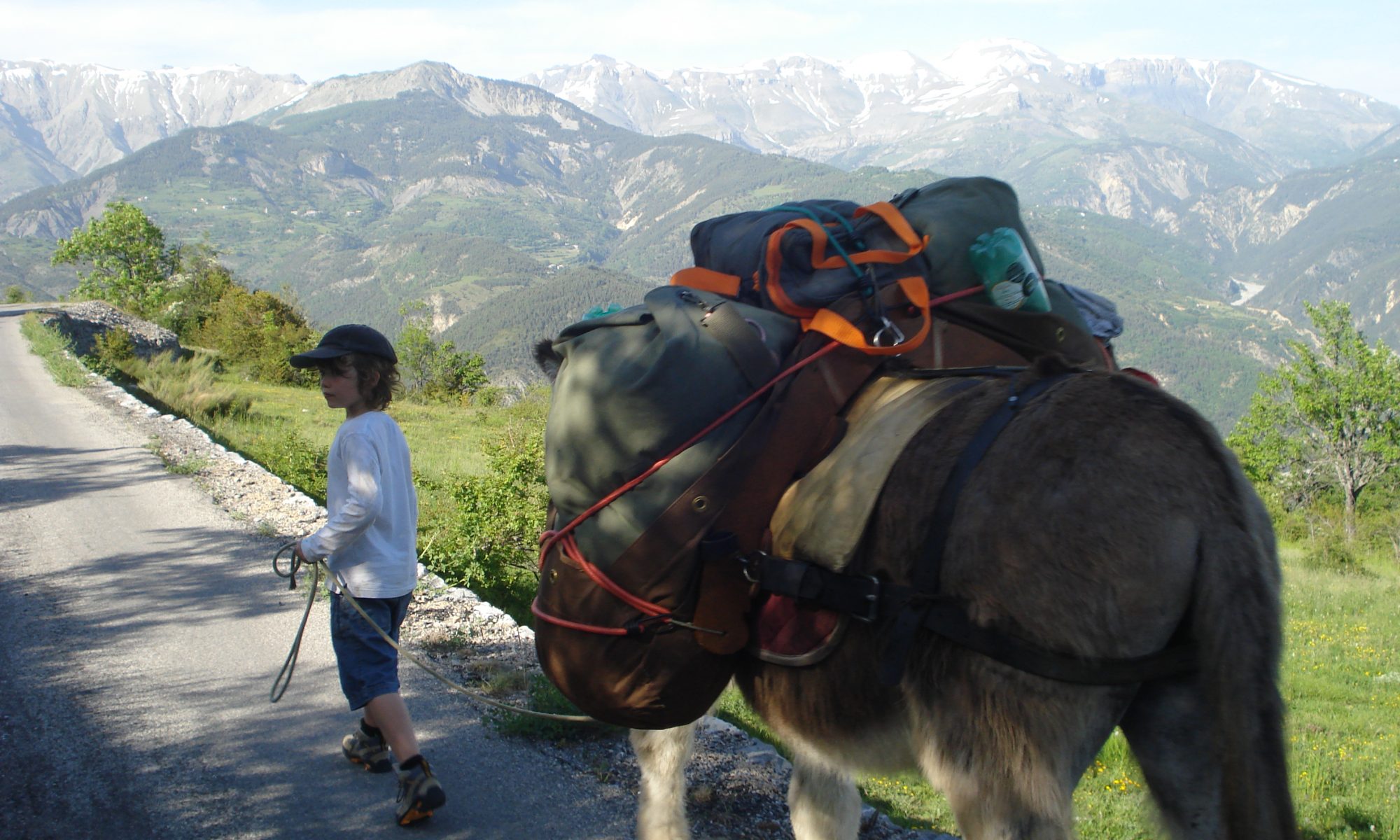
I always secretly wanted to be Julie Andrews. Leading children merrily across Alpine pastures, with songs to fix every dilemma, and Christopher Plummer hanging on my every note. So, walking in the Alps in late May, (albeit French, not Austrian), with my husband and two sons, the snow-capped peaks glistening in the distance, and Edelweiss-covered meadows underfoot, I was, at last, given the chance to become a veritable Von Trapp.