
Mega-resorts – the last resort?

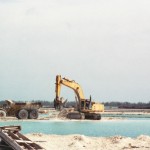
bulldozers-jan-06-bimini-gail-woon1Tourism Concern, the UK’s leading charity which campaigns long and hard to put a stop to exploitation in the travel industry, has given the bigwigs in tourism an ultimatum. Mega-resorts, designed to simply to attract dollars rather than sustainable development, have to stop.


Too often, people’s livelihoods are ignored when the big bucks builders come to town, and ‘suddenly’ planning permission is given to convert farming or fishing communities to hotels, second homes or golf courses. Tricia Barnett of Tourism Concern adds, “The needs and rights of local communities are being pitched directly against those of mega-resorts, with the resorts winning out almost every time”.


According to Tourism Concern, the government of Grenada, for example, has sold off state land for a 400 acre luxury development, including 170 private villas, a private island, golf course and marina. It is located in Mount Hartman National Park, despite being a protected area and the last remaining habitat of the rare Grenada dove. Or in The Bahamas, despite fierce public opposition, the development of Bimini Bay Resort has caused irreparable damage to the marine ecosystem, which local people depend upon for their livelihoods. See www.tourismconcern.org.uk.


Jamaicans are angry too, as illustrated by aptly named website www.jamaicaforsale.net. Jamaican environmentalist Diana McCaulay has teamed up with fellow Jamaican filmmaker Esther Figueroa, to make one of the most powerful films I have ever seen about how extreme tourism development affects local people. Click on the site for lots of interesting clips, featuring interviews with over fifty people involved in tourism, from the Prime Minster to fishermen, scuba divers to stall holders.


However, don’t let this put you off going to these stunning places, just seek out the more responsible ways to do it. In Grenada, for example, eco-lodge Paradise Bay has windmill and solar energy, local food sourcing and social programmes (www. paradisebayresort.net). While you are there, go turtle watching with conservation group Ocean Spirits (www.grenadatours.com/turtlewatch.php), or visit the Fairtrade Chocolate plantation Belmont Estate (www.belmontestate.net). It’s not all gated concrete communities in Jamaica either. Check out www.responsibletravel.com for more interesting options. One of my favourites is Hotel Mocking Bird Hill, in the less touristy Port Antonio, with high standards of environmental practice, as well as sourcing everything locally (www.hotelmockingbirdhill.com). This is one of many featured in Alastair Sawday’s Green Places to Stay, a superb, well-researched guidebook.


Many resorts have responsible tourism policies, but it is hard to see if these are actually implemented until you get there. If you want to travel with a tour operator, First Choice has one of the best track records for responsible tourism policies. Along with My Travel, Thomas Cook, Sunvil or Cosmos, they are supporters of The Travel Foundation, which runs sustainable tourism projects around the world (www.thetravelfoundation.org.uk).


Another option is to sign up with www.yoursafeplanet.com before you book. This inspired website puts you in touch with carefully selected local experts, who have all the best bits of local info, such as which concrete jungles to avoid, the quietest beaches, the best markets, their favourite restaurants, and what to do out of the main tourist season. For £45 sterling you are put in touch with a local expert who will give you pre-departure advice, as well as support while you are there. My other favourite font of knowledge is leading green travel writer Richard Hammond’s www.greentraveller.co.uk.


Until all the big companies are totally transparent about the impact they are having on a destination, I opt for independent travel. That way you can see exactly where your money is going, and meet the people who are making big personal investments into sharing what they love most about their homeland. At the end of the day, that has to be the best way to say no to the bullydozers.

This article was first published in The Irish Times, 21 March 09



Ferry green?

“Are you scared of flying?” is the usual taxi driver’s question en route to Dublin Port. “No, I just like travelling this way” is what I say now, as getting into a carbon debate at 7am is not good for anyone’s head.
 

In fairness, getting into a carbon debate isn’t good for anyone’s head, especially if you are trying to research a ferry’s footprint. Up until a year ago, most ferry companies came up blank if you asked for carbon emission data or whether their sick bags are biodegradeable. However, the Passenger Shipping Authority, the UK trade association ferries and cruises, recently commissioned a CO2 study; the results showed an average of 0.12kg CO2 per passenger/km. So, on a 100 kms crossing from Dublin to Holyhead, my footprint is 12kg of CO2. Putting that in perspective, driving 100 kms in an average car emits, 28kg CO2. ‘Average’ is a big word in CO2 talk. The PSA goes on to tell us that ‘some’ companies recycle, ’some’ are restricting non-polluting paint, and ‘some’ are improving fuel use.


However, the stats are vague, with little information on which company is greenest. One thing is for sure, the newer the ship, the better. Irish Ferries claims to operate “one of the youngest and most fuel efficient ferry fleets”. Its carbon research produces average figures too, 1.13kg/km for each car, with an average car load of 3.4 people. More averages, more confusion. What is not top of their green list is their linking with Tesco Card for bargain prices, which is always frustrating for some of us who are trying to shop locally.


Stena Line’s eco-policy aims to reduce energy consumption by 5% a year, by changing propellers, adjusting timetables and speed analysis.  They use non-lead paints and recycle engine heat for onboard heating, and recycle their waste. I asked one member of staff recently if my plastic cup was going to be recycled, as it was piled into a black binbag, with a load of chips and ketchup. The silent ‘am I bovvered?’ response put me quickly back in my little green box. Hopefully they are all disposing of waste properly, but if they are, I wish they would tell us all about it.


At the end of the day, the carbon calculators still tell me that if I fly Dublin to London, for example, my emissions are double that of going by ferry and train. Which leads to another problem; ferry travel is still aimed at car-drivers, rather than train passengers. Once you start pumping the gas on the autoroutes at the other end, you may as well have flown. Ferry ports in France are well connected to trains, but less so closer to home. Dun Laoghaire and Holyhead have train stations, but Dublin Port is tricky if you miss the bus. Arriving into Belfast port at dawn is just downright spooky, it is so deserted, and miles from anywhere. 


To link up with trains, check out the gloriously geeky website, www.seat61.com, which  tells you how to get anywhere in the world by train and ferry. There are great ferry and rail bargains to the UK with www.sailrail.co.uk, and Stena Line also offers rail-sail deals at www.stenaline.co.uk/ferry/rail-and-sail.


As for the hassle factor, ferries and trains win hands down for me, travelling solo or as a family. You can carry all the makeup you want onboard a ferry, as well as bikes, buggies, and bottles of water. My bag was searched at a ferry port recently, which I found a little amusing as a hundred or so cars drove on beside me, packed to the gills with everything possible, and not being searched. But don’t get into that debate with security men at 7am either. On average, they don’t thank you for that.

(First published in The Irish Times, 07 March 09)


Ecoescape launches ecotours

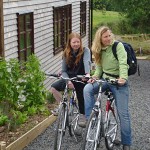
catherine-and-laura-smaller-res-150x1501Often it is the people not just the place who inspire us to travel. You meet someone at a party, and they bubble over with excitement about a place they have just visited. Or you  might be lucky enough to have a friend with a holiday home in some hideaway heaven, and you get the keys.  One person to put my feet firmly on the road to ethical travel was Laura Burgess, the founder of EcoEscape. Three years ago Laura decided to write a green travel guidebook to the UK. At a time when Rough Guides and Lonely Planet were taking over the bookshelves, and budget airlines the runways, ‘eco’ was still associated with warriors and washing up liquid.  Laura worked for an English regional tourist board, and had become familiar with a variation of tourist ‘products’, some of which she liked, and others she definitely didn’t.

Keen to tell the world about the places she did like, Laura left her job and went in search of funding and (still only 24 at the time), received a young person’s Lottery grant to self-publish  EcoEscape UK. This was one of the first green guides to the UK, representing fifty EcoEscapes, all shining examples of her own personal travel philosophy. That travel should be as ethical as any other consumer product out there and, at the same time, still be a great thing to do with our time off.


I loved Laura’s first publication of EcoEscape UK so much, I approached her to write an Irish version, and I am glad to say she agreed, and it was published last year. However, Laura continues to inspire me to travel, through her new enterprise EcoEscape Tours, an online booking service for the sorts of trips she likes to feature in her books. She says that “Every EcoEscape I’ve taken has been a memorable experience. From kayaking, coasteering, and fishing at sea to wildlife watching, cycling, eating great food or simply taking time to escape from everyday life. It’s exciting to think that travel in the UK and Ireland can leave such a wild and wonderful impression. I like to think that EcoEscape Tours is a complement to the books, and a celebration of some of my favourites”.


At the moment her list is modest, but as someone who prides herself on meeting everyone she represents, and experiencing what they have to offer, she will build her business slowly, surely and without doubt, ethically. To date, you can choose from kayaking off the Welsh coast, wildlife watching in northern Scotland, food foraging in woodlands and cycle touring beside Loch Ness. Accommodation ranges from cosy wood cabins and eco-lodges to luxury locally-owned B&Bs. Irish tours are to follow in the near future, with new tours being added to her bag of eco-delights all the time.


When I asked Laura what sort of people she liked to represent she told me “I like meeting people who really know how to create a wonderful place to stay – I’m not just talking plump pillows and polite conversation. I mean those who fell in love with where they live and work, and want nothing more than to pass on a bit of that sparkle to their guests”. And if anyone knows about passing on that sparkle, Laura should. It’s what led me to get up and go around Ireland, after all, and meet some of these wonderful people she talks about. So, if you are looking for a good eco-tour, just do what I did. Talk to Laura.

For more information on EcoEscape Tours, see www.ecoescape.org/tours


(First published in The Irish Times, 21 February 2009)


Paris vert, je t’aime

paris-velib-bikesI know that Paris for Valentines is a cliché, but it is so easy to fall in love there. As an ethical traveler, I am also in love with Paris. Living in London I am spoilt, as I can take a train to get there, with no better start to a trip to Paris than on the Eurostar. Quick glass of bubbly at the champagne bar in the magnificent Kings Cross St. Pancras International station, and three hours later you can do the same thing in the centre of Paris . If you haven’t done it yet, it’s worth a trip to London just to experience it.


For eco-friendly accommodation, stay in a wooden lodge surrounded by forest in Versailles, only twenty minutes by train from central Paris . It’s run by my favourite eco-campsite Huttopia (www.huttopia.com), and for €105 per night, you can watch the sun come up in the morning from your wooden decking, and zap in on the train to watch the Eiffel Tower light up in the evening. Then back to the warmth of the lodge’s wood-burning stove.


If you prefer hotels to ‘huts’ then one hotel chain to check out is Accor. It won a French Responsible Tourism Award in 2008 for its sustainability practices. Its beacon hotel is the Novotel Gare de Montparnasse, the first Parisien hotel to be given the High Quality Environment label, ensuring better insulation, energy-efficient lighting, good waste management, low water and energy consumption, and ecological materials such as carpets, wood and paints (www.accorhotels.com). For a less pricey (and less central) option, the Accor Group’s Ibis Hotel in Porte de Clichy has installed solar panels to take the edge of its energy consumption.


For green travel, Paris je t’aime. Hire bikes at Huttopia to explore Versailles and the surrounding forests, or make the most of the city’s exemplary new cycling venture, Velib. This enables you to hire one of  200 000 bikes dispersed over 1450 terminals just using your credit card, with the first half hour free of charge (www.velib.paris.fr). The ‘Paris Respire’ ( Paris breathes) scheme has closed some of the city’s main arteries to motorised traffic on Sundays and public holidays, such as sections of the left and right bank along the Seine. This is people watching heaven by the way, with an eclectic mix of Parisiens showing us how to saunter in style.  For more details on these and other cycle routes see www.paris.fr.


Non-cyclists can cuddle up in the back of a Cyclobulle, an electric chauffeur–driven tricycle company based in Rue de Cléry in the 2nd arondissment. Travel from one central location to another, or pay €19 for a thirty minute guided tour (www.cyclobulle.com). Ask them to drop you at one of the city’s organic farmers’ markets (‘bio’ in French), such as Boulevard Raspail on a Sunday morning, or Boulevard Batignolles on Saturdays. The Saturday morning market in Saint Honore in the 1st arondissement is small but very central and does usually have a few organic stalls.


Taste the real thing ready made at one of several good restaurants specializing in local and organic produce. You can shop and  snack at Biotifull Place, on the first floor of the Printemps store on Boulevard Haussmann or, if you are heading for Notre Dame check out Le Grenier de Notre-Dame. Le Potager du Marais is good if you are exploring the area’s famous boutiques or, in the Oberkampf district, Alter Mundi’s Fairtrade and organic deli and café is the foodie bit of its ethical shopping chain (www.altermundi.com). Bioboa is a good veggie-healthy watering hole after walking the streets of the Opera district. For details of these and more (and markets) see www.nouveauxrobinson.fr. It all just gets your juices flowing, really. But that’s Paris for you.


(First published in The Irish Times, 7 February 2009)