Making tracks along Tarka’s green and tranquil trail

Yarde Orchard hostel, North Devon

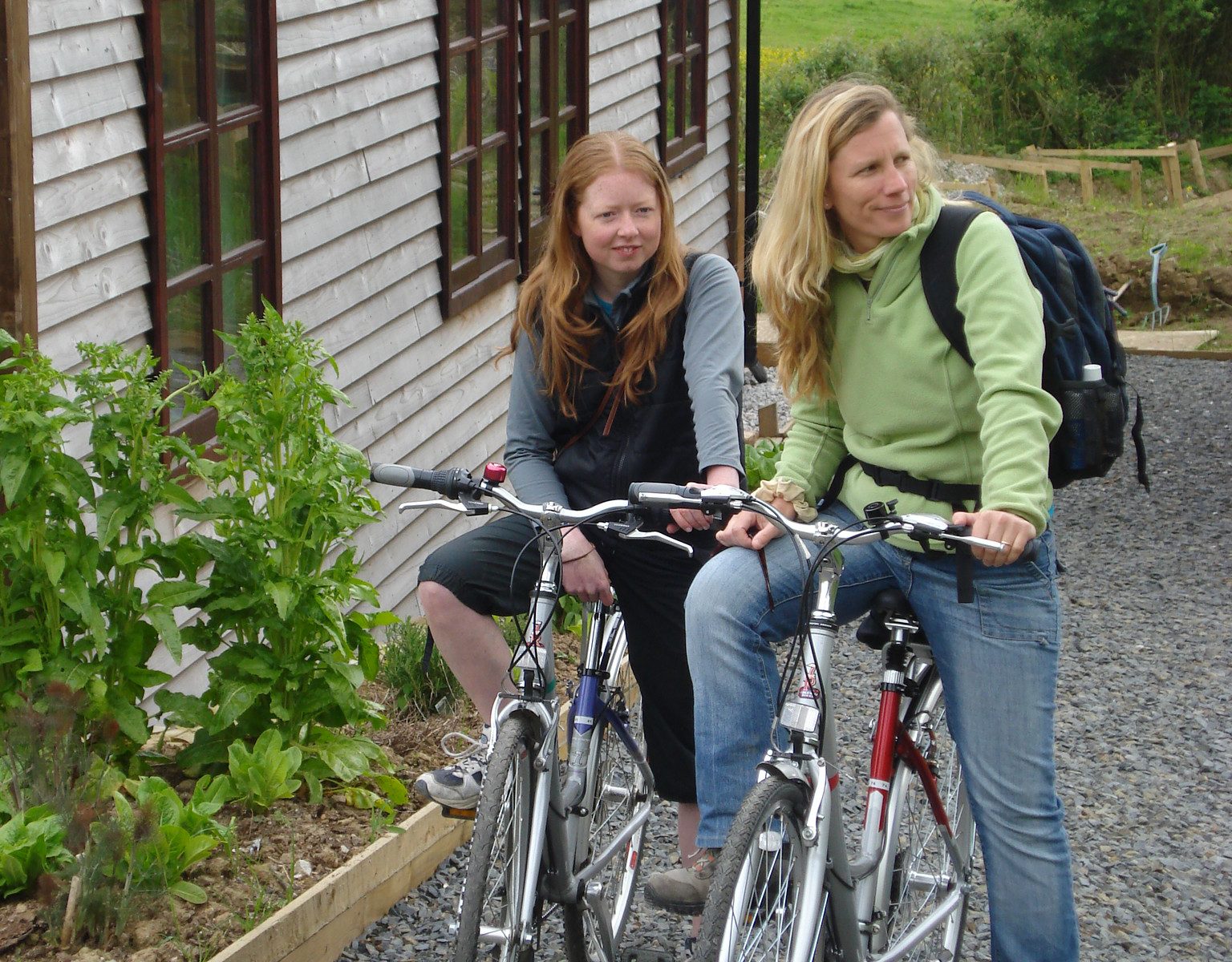
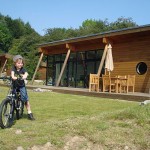
They always say you should never go back to the same place twice on holiday. But the Yarde Orchard Bunkhouse on the Tarka Cycle Trail in North Devon won my heart so much, I have bunked up there twice since Easter. Read more about cycling and accommodation on the Tarka Trail.

Continue reading “Making tracks along Tarka’s green and tranquil trail”

Natural Retreats – Yorkshire Dales

yorkshire-08-013_optThey say the camera never lies and the website photos of these designer wooden lodges, tucked into the Yorkshire Dales like birds nests were, indeed, enough to make my jaw drop. As we approached along an almost deserted road in one of England’s northernmost National Parks (despite being the height of tourist season), the Kevin McCloud wannabee in me was almost biting at the bit to see these cedar creations.


Natural Retreats is aptly named and their grey slate sign, set subtly into the dry-stone wall, was so natural, we almost missed it.  When we took the sweeping driveway down to the retreat, I thought I had missed the houses too, as there was nothing to be seen at first. Then my husband let out a gasp as he spotted the bronze-coloured wooden structures in the valley below, peaking out sporadically between the pines and ferns.  This had been no Photoshop job, for sure. They were gobsmackingly gorgeous, to use a technical term. Our children, two boys of five and nine, jumped out and ran down the hill in a Sound of Music meets Emmerdale sort of a moment.


The hills stretched out before us, dipping into valley after valley, wildflower-filled hedgerows concealing hay bales, perfectly placed as if posing for a painting. Views like this usually bode well for a holiday, Yorkshire, towards the east coast. I know the tradition is to book into the place with a bath after the camping holiday, not before, but we were in bits after recent work stresses, and thought that a couple of days to unwind before tackling any canvas and poles might be a good idea.

Natural Retreats peaking out from the mist of the Dales

but we had only booked for two nights, en route for a camping session on the other side of


We were reassured the minute we stepped inside our wooden house, with its floor-to-ceiling glass windows, gleaming white walls and designer sofas, open-plan kitchen, wood-burning stove and bedrooms which had nothing spared on five-star luxury. We opened our complimentary bottle of wine, part of a welcome hamper of local and Fairtrade goodies, and raised a glass to the best start to any camping trip.


There are eighteen of these wooden houses, so carefully positioned for minimal impact on this protected landscape, that I couldn’t find them all. Even using one of the walking maps, specifically designed for Natural Retreats, I am sure there was still one or two lurking behind a bit of woodland somewhere. Ours was one of the more ‘public’ ones, at the foot of the woodland, beside three natural ponds, developed out of the natural spring which provides water for the site. We had moorhens and herons for company, as well as a few frogs to keep our boys happy, as they watched them jump from one pond to another, and then dart under the houses. This was all part of the ecodesign, as the houses are built on wooden decking, which in turn is placed on three strips of concrete, in order to maintain a natural living environment underneath. The roofs are alive too, covered with sedum-moss which was turning a soft strawberry pink, as the wild flowers came to life.


There were a few other houses beside us, which was great for the children, who immediately made friends and were cycling from house to house within minutes. Public or private, you won’t be spending much time inside your hideaway, as the countryside seems to pull you towards it like a magnet here. This was the aim of the landowner and sheep farmer, Matt Spence, a self-confessed ‘National Park addict’. He rightly wanted to show off his homeland, in a way that was not only kind to his beloved Swaledale, but also contemporary and classy. He has certainly pulled this off.


Natural Retreats was criticised recently for branding itself as ‘eco’ and having Tropicana in its welcome pack. Yet, that journalist omitted to mention that ecotourism is also about community development. Natural Retreats has reeled Yorkshire Dales tourism into the 21st Century, and will entice a whole new generation of tourists to this area. They work hand in hand with, and have gained huge respect from the local community. The welcome hamper (the Tropicana well and truly gone) is from the local grocer, Ken Warne, whose wonderful shop we visited the next day. He is one of those grocers who wears a dark green overcoat, and has the most eclectic range of fine produce on his shelves to meet the demands of his adoring Richmond clientele, and on the verge of closing before Natural Retreats passed the hamper business onto him. Just about everyone employed on this 54 acre site, from managers to master joiners, drystone wall craftsmen to furniture designers is local. Ecotourism is not all about eco-friendly lightbulbs, recycling, and woodburners. Although all these are on offer too.  Not forgetting the natural insulation, rainwater harvesting and wood management system. Solar power was not allowed on planning grounds unfortunately, although the passive solar heating from the huge windows is enough to dry your walking boots after a few hours.


Walking into the local town of Richmond was absolutely the best way to sample the Dales in a day. Described as a twenty minute walk into this buzzing Georgian market town, you will be lucky to do it in this time, unless you are totally unmoved by the scenery en route. Which is unlikely. We took about three hours, mainly because we stopped along the banks of the River Swale to plunge into its icy waters, and swim from one riverbank to yorkshire-08-071_optthe other, where someone had kindly hung a ropeswing.  Then on through glimmering glades right up to the towering cliffs which support the impressive remains of Richmond’s Norman castle. Boy heaven. After a tour of the castle, a must for views all the way across to the North York Moors, we had an early dinner at the town’s converted railway station, Seasons, where Yorkshire rarebit or Whitby fish and chips is highly recommended for swimmers and knights.


We had only two regrets at Natural Retreats. One, that we hadn’t gone the whole natural hog and come by train. You can take the train from Holyhead to Crewe, then Manchester, and, finally, the stunning TransPennine Express all the way to Darlington, the nearest train station, only a 20 minute taxi ride away, and arrange for mountain bikes to be delivered to your door. The other regret was, quite simply, that we hadn’t booked for longer.


A 5 night stay at Natural Retreats starts from £880 per residence, sleeping six.  There is a 2 night minimum stay, from £325. Price includes accommodation, a food hamper on arrival, logs, linen and towels. For more information Tel: +44 (0) 161 242 2970 or www.naturalretreats.com

(This article was first published in The Irish Times, 30 August 2008)


The Maasai and Kenyan tourism

kenya07-058_optIt is not everyday I get the opportunity to sit under an Acacia tree in the middle of the Masai Mara, listening to Maasai men, women and children, discuss their future. The famous black dots of the Wildebeest are interspersed with the equally world renowned red robes of Kenya’s Maasai people, drifting across the Mara plains, to take part in today’s meeting under the tree.


I have been invited here by The Travel Foundation, a UK charity funded by leading tour operators. It runs sustainable tourism projects in popular tourism destinations such as Kenya. In January 2006, Dr Cheryl Mvula came to the Masai Mara on holiday, and decided to take a cultural tour of Enkereri, a Maasai village. She paid $20 and watched it being given to the village elders. After her tour, she was shown the women’s craft work, or ‘curios’ as they are sometimes called. But it was the curios that got Cheryl curious. The women appeared really desperate to sell, and she knew instinctively that there was something wrong with this picture. After all, her tour group had just given them $100, but there was not a lot to show for it.


A responsible tourism consultant who specialises in community development, it didn’t take long for Cheryl to investigate. One source inside a well known Kenyan tour operator told her, “When you are off looking at curios, your driver guide takes the money back from the elders. They leave them $4 out of the $100. That’s how it’s been working here for thirty years”.


But not anymore. Within weeks, Cheryl had received funding from The Travel Foundation to take on this exploitation and returned to Enkereri. She spent days and nights talking with the Maasai, who nominated two junior elders as representatives. Cheryl’s first question to Ben Rramet and Ben Longisa (now fondly referred to as Big Ben and Little Ben) was “Why did you put up with this exploitation for so long?” They told her that the driver guides, employed by tour operators, deserved the money because, as far as they were aware, the drivers had to ‘press gang’ visitors to come to the villages. “Tourists think we have typhoid and HIV, and are afraid to come here. But we need them to buy the curios”. Appalled by this lie, Cheryl showed them tourist brochures full of photos of their people telling them, “The Maasai are famous. People want to meet you, as long as you are happy for them to do so.” And this was the moment the Kenyan worm turned.


For the next year they worked together, learning about the workings of the tourist industry, business record keeping, banking, community development, health and hygiene, crafts development and marketing. The villagers’ hunger for knowledge and willingness to learn far outweighed any bitterness about the exploitation of the past. By May 2006, the work had stretched to four other villages, and the creation of the Mara Triangle Maasai Villages Association. Each village opened a bank account, nominated Finance, Tours and Marketing Managers and together they were ready to take on the big boys. They knocked on the doors of lodges and tour operators who, in the past, had turned a blind eye to the unethical practices.  The Maasai presented record books, showing visitor numbers being sent by each lodge, and proof of how much money was being given and taken back by their drivers. The lodges were no longer able to deny it. Big Ben told me, “We were not even allowed in through the gates before. Now we are sitting around the conference table doing business. It is wonderful”. 


Most of the lodges in the area are now using the Maasai’s new system. Tourists buy a $20 voucher from the lodge for a cultural visit to one of the villages (rotating visits to avoid favouring one village).  The drivers don’t have access to cash anymore, just their larger than average salaries for Kenya, and tips to boot.  At the end of the month, one hundred per cent of the tour money is lodged into the villages’ bank accounts.


Which is what brings me to be sitting under this tree in November 2007.  It is the Mara Triangle Maasai Villages Association’s first AGM. The two Bens and Cheryl present details of the Association’s progress in a year. This amounts to $43000 from tours alone, an 800 per cent increase in just a year. The applause and cheers must be heard all the way to the Serengeti. The men hold hands and smile proudly and the women translate to their excited children. Enkereri has extended its school and pays two teachers’ salaries. Each village has built a long drop toilet for visitors, with plans to build one for villagers. However, tradition dictates that this should be positioned in the privacy of the bush, at a distance from the village. Such hygiene improvements should help combat common illnesses such as diarrhoea.


Little Ben tells Cheryl that they are waiting for her to tell them what else to spend it on.  “This is your money. You decide”, she says and sends them off into their village groups to discuss it.  An hour later they return to the main tree and share their thoughts. There is a strong common thread of welfare and community. They want to build bore holes to gain access to clean water so the women don’t have to walk several kilometres to collect infected river water. Next on the wish list is more local schools, and college funds. They all agreed on a need to replace the current firewood  fuel system; “The women have to go further and further into the bush, risking attacks by elephants or lions”. I marveled at some of their business ideas like using cow dung as fuel, and possibly even supplying this to lodges. As their lives revolve around cattle, there is no shortage of resources. But I couldn’t help thinking that issues such as access to clean water is a basic human right, not something that they should be paying for out of tourism income.


The Maasai’s achievements in one year are awe inspiring, not to mention their strength, honesty and determination. But this is just the tip of the termite hill. There are still hundreds of Maasai being ripped off in Kenya. Cheryl plans to take this new system elsewhere, starting in the New Year with twenty villages in the Sekanani area of the Mara. This time she will be helped by two consultants contracted to lead workshops and set up systems. Enter the two Bens, now skilled facilitators in their own right.


Meanwhile, there are still thousands of tourists being lied to. As I returned to my lodge in the evening, I realise that many are not interested in the Maasai. Conversation starters are invariably, “Did you see anything exciting today?” “I saw a crocodile eat a wildebeest”, “How wonderful, I saw a cheetah maul a lion cub”. “I listened to the Maasai talk about having hearts full of pride and gratitude” was usually a conversation stopper. A retired insurance broker from the Shires proudly announced, “The Maasai get plenty from us, and still they are after our money. I don’t know how they live like that.  It is God’s gift to be born an Englishman”. I defended the Maasai’s intentions as being honourable, and explained that their traditional lifestyles were unique. He only became interested when I pointed out that ‘Englishmen’ were being lied to about the Maasai’s income. This made him put down his binoculars and listen.  


On my various visits to Maasai villages I heard the word “welcome” a thousand times. They take  visitors into their homes without judging, mistrusting or insulting them. Why can’t tourists do the same thing? Luckily, many visitors are more open minded than this. If you want to meet the Maasai, best to do so through one of the lodges in the Mara Triangle, or use a KATO tour operator, which signs up to the voucher system from January 2008. If you are travelling elsewhere in Kenya, don’t give cash to drivers for cultural tours and ask for proof of a transparent system. If none of this is possible, visit the villages anyway, but don’t give money to the elders until the end of your visit. That way the drivers can’t take it back from them again.  And when they thank you, just say “you’re welcome”. Because if anyone understands and practises the true meaning of this word, the Maasai do.

 
For more information on the work of The Travel Foundation see www.thetravelfoundation.org.uk


Catherine stayed at Olonana Camp, Masai Mara, one of Abercrombie and Kent’s Sanctuary Lodges, which is soon to subscribe to the Mara Triangle Maasai Villages Association’s visitor system. See www.abercrombiekent.com for details.


For information on Mara Triangle Maasai Villages Association, see www.katokenya.org or email: cdmvula@aol.com

This article was first published in The Observer, 11 May 2008

On the rails

catherine-and-louis-holyhead-london-train_optI used to hate travelling back home to Ireland at Christmas. A cold slow train from London, the Holyhead hall of hell and then, of course, the ferry.  Never a good start to the season of joy and goodwill. Then budget airlines were born onto us.  They cried “Oh come all ye faithful”, and we followed the star to far-off airports to guide us home, and all was well with the world.


Until I went and got me a conscience. My 2007 New Year’s resolution was to swap the plane for the train whenever possible. So far so good, until the impending Christmas trip home and the ghost of Christmas past reared its ugly head. It was hard enough when I was travelling alone, but now I have two young children. Just  as my finger hovered over the ‘check flights’ button, my eco-warrior son Louis reminded me, “No train no gain, Mum”. I had to have faith in the Virgin. Train that is. Not prepared to risk ruining Christmas, however, I did a test trip in September for my son’s birthday.


We got off to a bad start just booking the trip. It was a logistical nightmare until I discovered the wonderful SailRail agency. So I advise you to avoid all cyber conniptions and go straight to them, talk to helpful humans who tell you all you need to know and then actually book it for you.


We left London Euston at 9am and within minutes were lashing through luscious English countryside. We had reserved seats facing each other, and settled into our warm, comfortable nests for the four hour journey to Holyhead. A fellow Dub, travelling from Edinburgh, told me she no longer flies home. “It’s better for my head. I like to take time to think about where I am going, what I am going to do when I get there”. On this journey, we chatted, planned the birthday party, played cards and read. As he took in the sights, Louis asked “Why don’t grown ups look out the window Mum? Is it just a child thing?”  I looked at everyone wired to some device, determined to shut out the world around them, and switched off my mobile.


This was a direct train and soon after lunch (the sandwiches are almost gourmet compared to the processed cheese of yesteryear), the sea came into view. I kept a nervous eye on the waves which, despite the calm, were not enough to quell my memories, and I stuffed sea sickness remedies down all our throats. We arrived with plenty of time to board, and walked off the train into a clean and modern terminal. A Donegal man who makes the trip six times a year, told me, “It breaks my heart. We had all been begging for a new terminal for years. Now it’s here and it’s empty. It was a cattle market before, dirty and full of drunks”. Sounds like Stanstead on a bad day, I thought.


As we checked in our luggage, (no more hauling your bags around the boat), I didn’t have to remove shoes, belts, hand in bottles of water or expensive handcreams. And no queue.  We walked through a covered walkway to the boat and boarded the vast Irish Ferries’ Ulysses, with cinema, restaurant, shop and endless rows of comfy seats.  The waves were kind to us, and we all dozed off only to be woken by a cacophony of ringtones telling us were welcome to Ireland.


Up on deck, the site of the red and white chimneys as we coasted into Dublin, dead on time at 17.25, invited a round of the Irish rugby anthem from my boys, at gloriously full volume into the wind. It was one of those cosy ‘good to be home’ moments, which you definitely don’t get on the plane. Nor do you get home so easily. We had hired a car for the weekend, and Dan Dooley, the only rental company at Dublin port offers a ‘meet and greet’ service. We disembarked, had bags in hand five minutes later, hopped into the car (I tried to get a hybrid, but none available to date) and were home in time for the RTE news and cup of tea.  


After a successful weekend of partying, we sped off on the Catamaran at 9am Monday morning. My sons were the green ones this time, sick bags held tightly to their faces for the duration.  Luckily, the journey was quick and the minute we stopped they were right as rain, not hesitating to down a couple of Holyhead hot chocolates as we sat out the hour long wait for the train. This time the train had one change. At Crewe. An elderly Galway man announced, smiling, “Ah sure, I wouldn’t feel I’d been in Ireland if I didn’t have to change at Crewe”. It was a quick turnaround, and the waiting room was warmer and cleaner than I remembered. We got to London ahead of the rush hour, jumped on a tube, and were home in time, again, for tea.


One carbon calculator tells me that my rail/air family footprint would have been 1.31 tonnes, compared to 0.42 for rail/sail to Dublin. A significant difference. I do believe that our dependence on short haul flights has got out of hand. But my efforts to be a more responsible traveller have taught me one more thing. Time is of the essence. Taking more of it, that is. As we snuggled up on the last leg of the journey, told stories, played chess and, yes, just looked out the window, I vowed to book the Christmas trip as soon as we got home. The ghost had definitely, been put to rest.  


Catherine travelled with Virgin Trains, Arriva Trains and Irish Ferries. See www.arrivatrainswales.co.uk, www.virgintrains.co.uk and http://www.irishferries.com for details.


For Rail Sail Bookings from on any Irish route, see www.sailrail.co.uk, or phone UK number + 44 8450 755755.  Note, there is no Irish office, so you need to give ten days for postage of tickets.  Adult return sail/rail fares from £52 for adult and £13 for a child.


For ‘meet and greet’ car hire at Dublin port contact Dan Dooley, Tel: +353 62-53103 or see www.dan-dooley.ie


(This article appeared in Ireland’s Sunday Tribune, 28 October 2007)